
Zigbee: how smart home sensors last for years on a battery
Zigbee is a wireless protocol for the smart home designed for very low power consumption. Zigbee sensors can run on a battery for months or years, and mains-powered devices relay the signal, forming a mesh network.
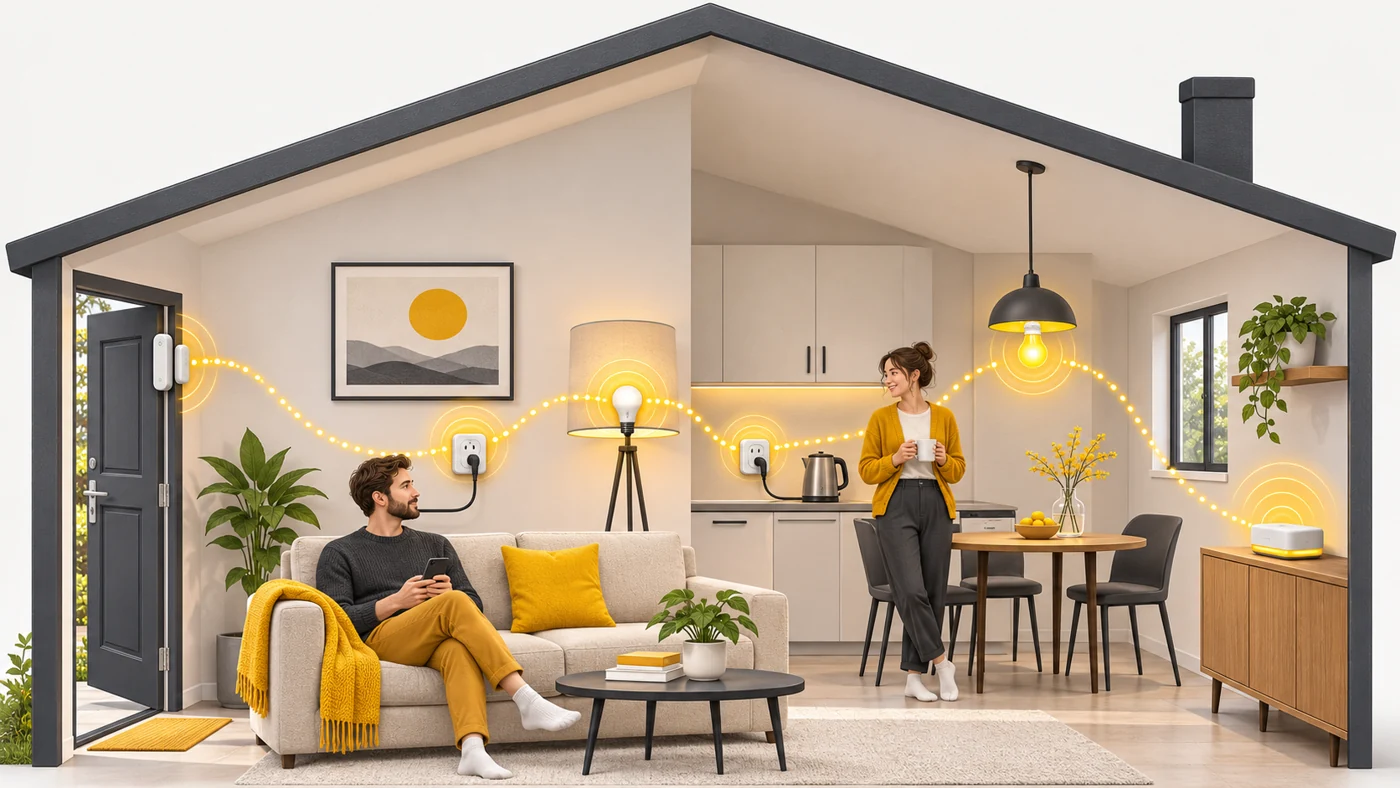
In plain words
Wi-Fi is like a loudspeaker: powerful but power-hungry. Zigbee is like a quiet whisper passed along a chain: each neighbour passes a short message on. A door sensor "whispers" once every few minutes, so the battery lasts a long time, while smart plugs along the way help carry the message to the hub.
How it works
- Zigbee devices connect to a hub (gateway), not directly to the router.
- Mains-powered devices (plugs, bulbs) become repeaters.
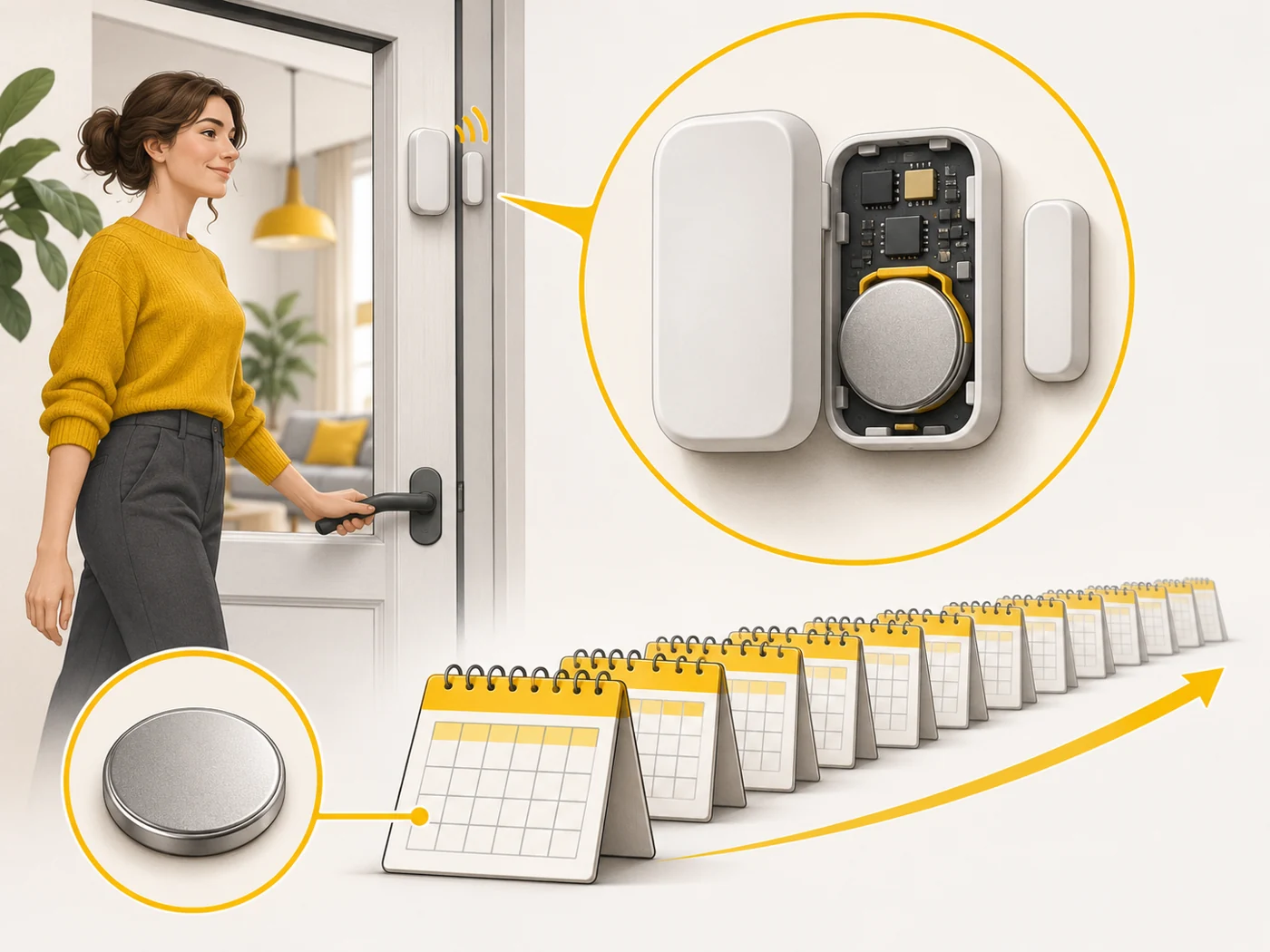
- Battery-powered sensors "sleep" most of the time and send short messages.
- The hub links the Zigbee network to your home internet and app.
- Zigbee runs at 2.4 GHz like Wi-Fi, but at lower speeds.
Where you'll see it
Sensors and smart devices from Aqara, Xiaomi, Sonoff, IKEA, Philips Hue (older models) and Tuya. Hubs: from those brands, Home Assistant with a USB adapter, and some Amazon Echo smart speakers.
Does it matter when buying
For lots of sensors (doors, motion, leaks, temperature), Zigbee is still very practical: cheap, economical and stable. But you need a hub, and devices from different brands are not always perfectly compatible. For new systems, compare it with Matter over Thread.
Myths
- Myth: Zigbee works without a hub. Reality: You almost always need a hub or adapter.
- Myth: Zigbee devices interfere with Wi-Fi. Reality: They share the same frequency, but choosing channels sensibly lets them coexist.
FAQ
How long does a Zigbee sensor last on a battery?
Usually from a few months to a few years.
Can Zigbee be combined with Matter?
Yes, through a hub that supports a Matter bridge.
Is internet needed?
Not for local automation; yes for remote control.