
1G: the first generation of mobile networks
1G is the first generation of mobile communication: the analogue networks of the 1980s and 1990s (NMT, AMPS, TACS). They only allowed voice calls - no texts and no internet.
In plain words
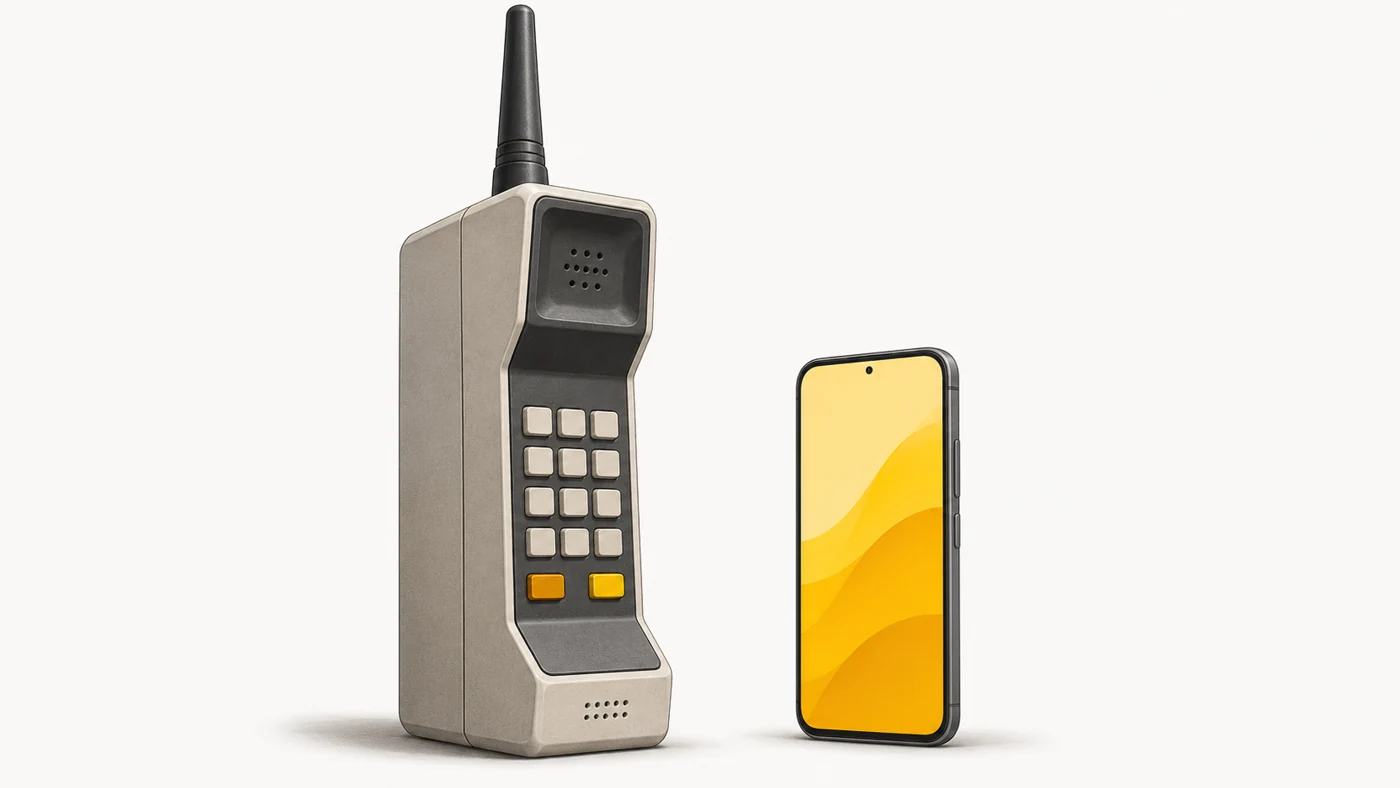
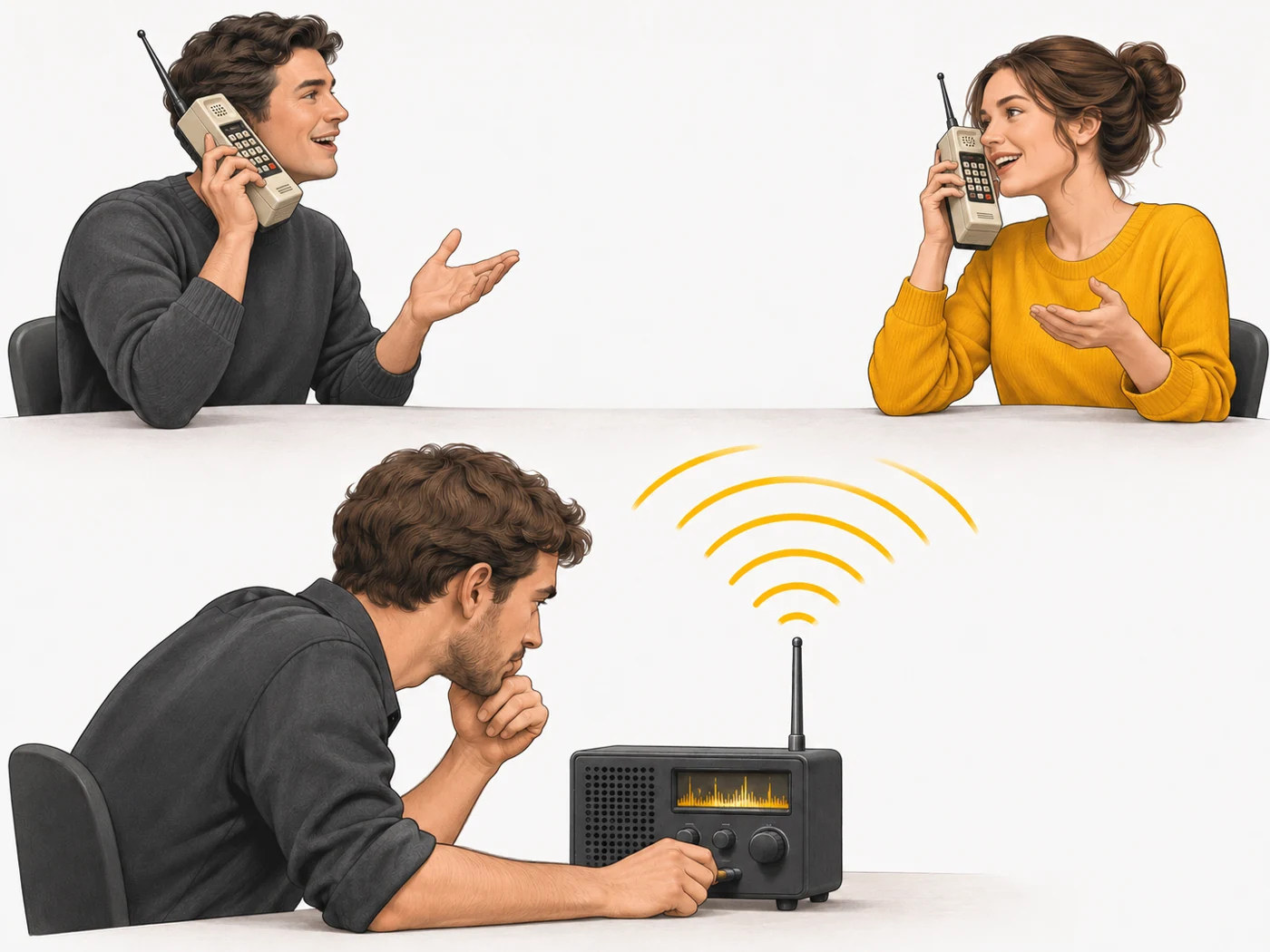
1G was like talking on a walkie-talkie that anyone tuned to the same frequency could hear. Voice was sent "as is" as an analogue signal, so a neighbour with a scanner could listen in. And the phones were as big as a brick.
How it works
- Voice was carried on an analogue radio wave.
- Each call took up its own frequency (FDMA).
- The network was already made of cells and towers.
- There was no encryption - calls were easy to eavesdrop on.
- Batteries lasted an hour or two of talk time, and phones weighed hundreds of grams.
Where you'll see it
1G networks ran in the 1980s and 1990s and were switched off long ago. Among the first were NMT in the Nordic countries (1981) and AMPS in the US (1983). Today 1G is part of tech history.
Does it matter when buying
Not for buying anything. But it is a fascinating story: in 40 years we went from a call-only "brick" to a smartphone with 5G and AI.
Myths
- Myth: 1G is the same as the first GSM phones. Reality: GSM is already 2G - digital.
- Myth: 1G had text messages. Reality: Texts only appeared with 2G.
FAQ
When did 1G appear?
In the early 1980s.
Why was 1G replaced?
Few subscribers per frequency, no encryption and no data.
Does 1G work today?
No, those networks have been switched off.