
GSM: the standard that started mass mobile communication
GSM (Global System for Mobile Communications) is a digital second-generation (2G) mobile standard created in Europe in the early 1990s. GSM gave the world SIM cards, text messages and international roaming.

In plain words
Before GSM, each country had its own mobile "dialect", and a phone from one country did not work in another. GSM became a common language: one system for dozens of countries. That is why you could travel abroad with your own number and move your SIM card into any phone.
How it works
- Voice is digitised and compressed by a codec.
- Each frequency is split into time slots for several subscribers.
- The SIM card identifies the subscriber and encrypts the call.
- The network is made of base stations, controllers and switching centres.
- GPRS and EDGE internet were added to GSM later.
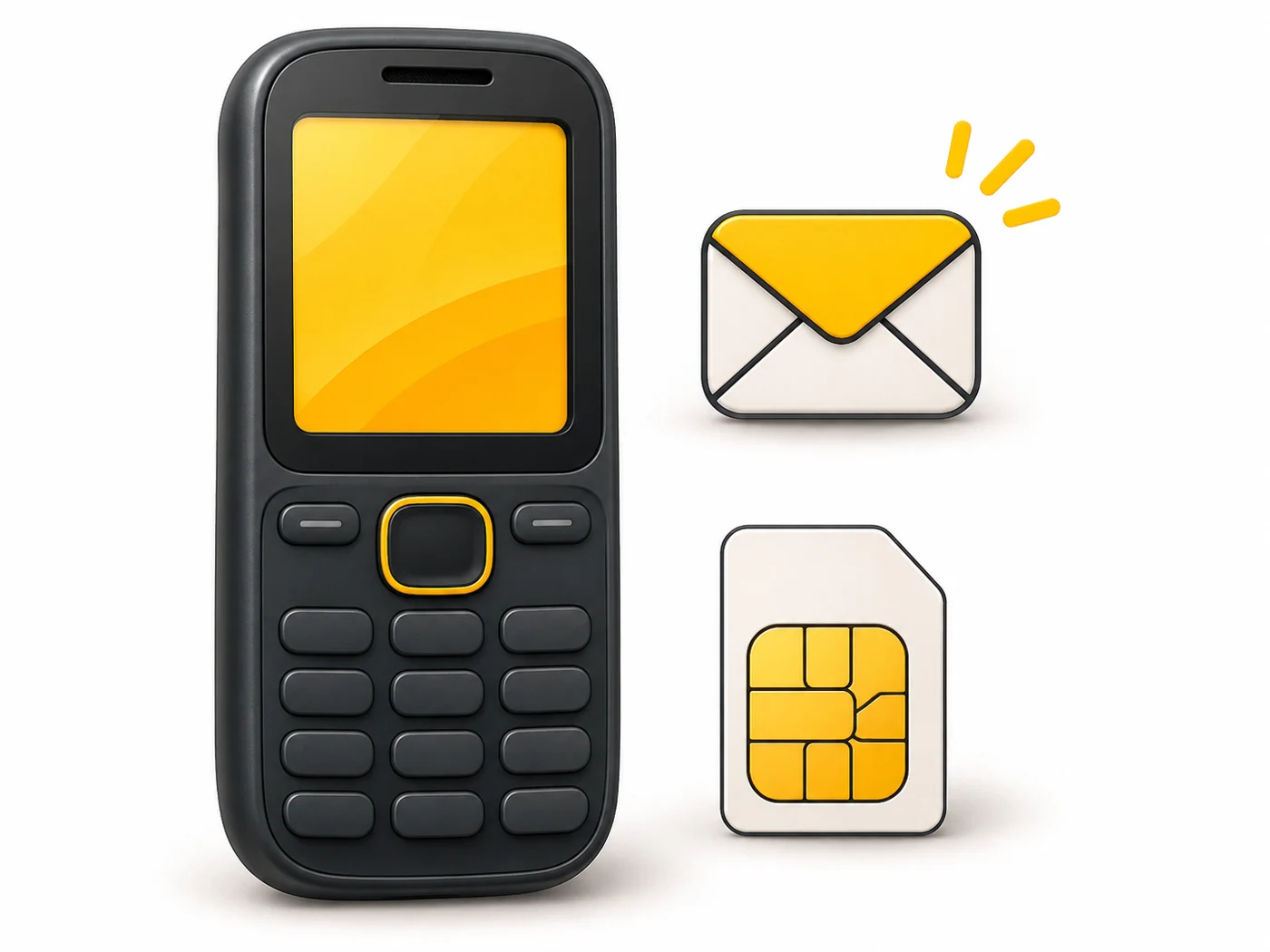
Where you'll see it
GSM still works in many countries for calls, texts and IoT devices. The GSM 900 and 1800 MHz bands have been used widely across Europe. Much of what was invented for GSM (SIM, text messages, IMEI) lives on in 4G/5G.
Does it matter when buying
Not when buying a modern phone. But GSM still matters for feature phones, alarm systems and trackers. It is worth knowing that GSM is gradually being switched off in many countries.
Myths
- Myth: GSM is the name for any mobile network. Reality: GSM is a specific 2G standard, though the word is often used more loosely.
- Myth: A GSM phone does not work on 4G networks. Reality: Modern phones support both GSM and 4G/5G.
FAQ
What does "GSM phone" mean?
A phone that works on GSM networks; modern phones support them too.
What frequencies does GSM use?
The most common are 900 and 1800 MHz.
Is GSM secure?
Its encryption is outdated, so modern networks are more secure.