
A-GPS: why your phone's navigation finds you in seconds
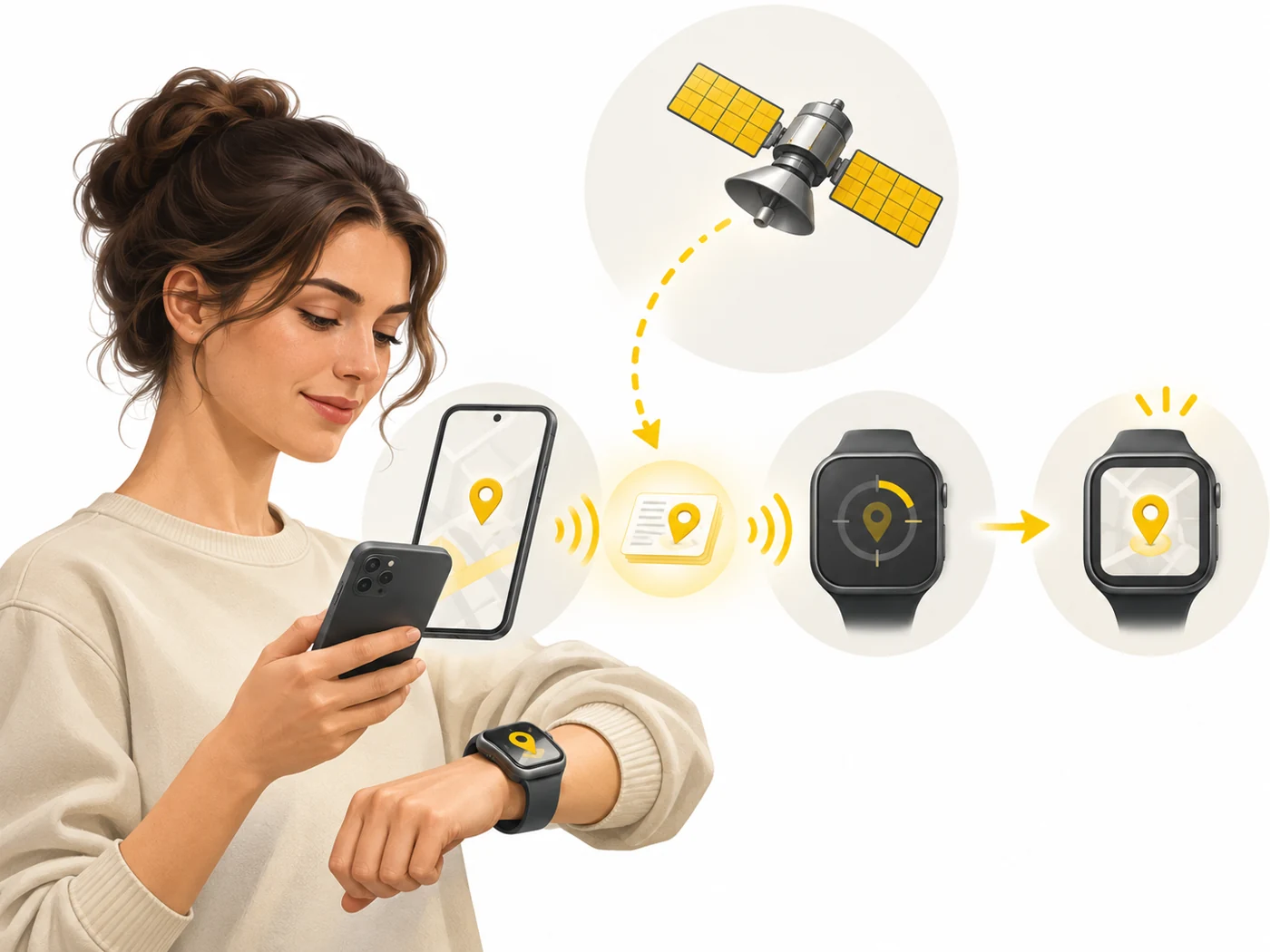
A-GPS (assisted GPS) is a technology that speeds up location fixes: the phone gets satellite position data and a rough location over the mobile network or Wi-Fi, so it does not have to wait to download them from the satellites themselves.

In plain words
Imagine looking for friends at a big festival. Without hints you would have to walk the whole site. But if someone writes in the group chat "we are by the main stage, on the left", you will find them in a minute. A-GPS is that chat hint: the internet tells the phone straight away which satellites are above you and where to look for them.
How it works
- Without help, a GPS receiver has to download orbit data from the satellites - this can take minutes.
- With A-GPS, this data arrives over the internet in seconds.
- The network also provides a rough location from towers and Wi-Fi.
- The receiver quickly finds the right satellites and refines the position.
- After that, navigation works without internet.
Where you'll see it
Almost every phone and watch with GPS supports A-GPS. Watches often download this data via the phone before a workout (features called EPO, CPE or "satellite predictions").
Does it matter when buying
Worth knowing: if your watch takes ages to "find GPS", sync it with your phone - it will update the satellite data and lock on in seconds. And step out into the open rather than standing next to a building.
Myths
- Myth: GPS does not work without internet. Reality: It does; the first fix is just slower.
- Myth: A-GPS uses a lot of data. Reality: The data is tiny - a few kilobytes.
FAQ
Why does my watch take so long to find GPS?
It has not synced for a while and lacks fresh A-GPS data.
Does A-GPS work with Galileo and BeiDou?
Yes, modern data covers several systems.
Do I need mobile data?
Wi-Fi or syncing with your phone is enough.
Related terms
GNSS (GPS, Galileo, BeiDou), Dual-band GPS (L1 + L5), Base station