
Cloud AI: how neural networks run on servers
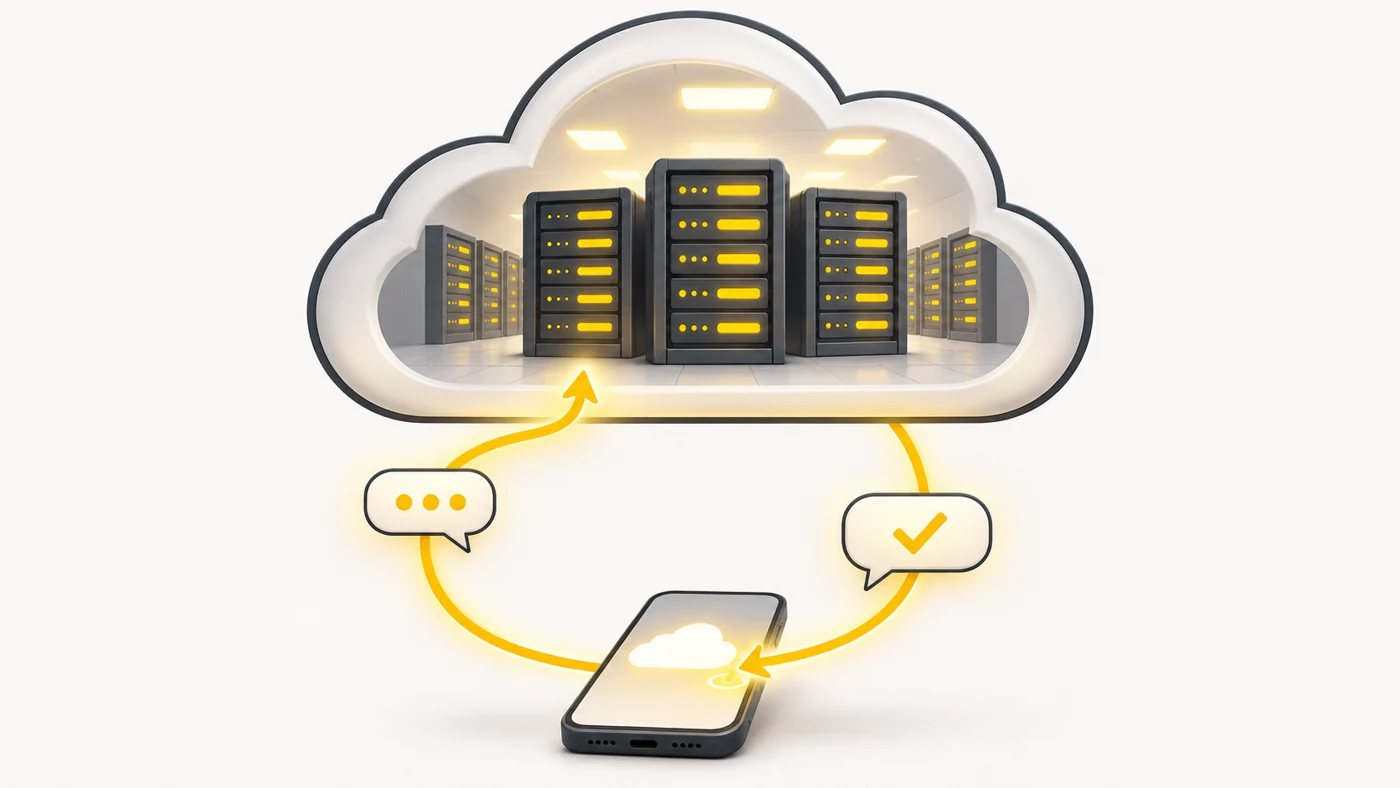
Cloud AI is artificial intelligence that runs on a company's servers in a data centre. Your device only sends a request over the internet and shows the answer.
In plain words
Imagine you have no oven at home, but you have a pizzeria's phone number. You order and get a pizza from a big professional oven you will never have at home. Cloud AI is that pizzeria: powerful servers do the hard work, and you just place the order. But without a connection, the order will not go through.
How it works
- You type a request in an app or on a website.
- The request travels over the internet to the company's data centre.
- A big model processes it on powerful server accelerators.
- The answer comes back to your device.
- The company may store requests for security or to improve the service - depending on its policy and your settings.

Where you'll see it
Almost all big chatbots, image and video generators, advanced AI features on smartphones, cloud translation and voice recognition. Phone makers often combine the two: simple tasks on device, complex ones in the cloud.
Does it matter when buying
Cloud AI gives you the most powerful models even on a budget phone - all you need is internet. The downsides: dependence on a connection, possible subscriptions and privacy questions. I suggest looking at the service's settings at least once and turning off the use of your conversations for training if you do not like it.
Myths
- Myth: Cloud AI "sees" everything on my phone. Reality: It only gets what you send in your request or what you have allowed the app to access.
- Myth: The cloud is always slower than the device. Reality: For big tasks the cloud is often faster, because servers are many times more powerful than a phone.
FAQ
Does cloud AI work without internet?
No.
Are my requests stored?
It depends on the service. Check the privacy policy and history settings.
Why are some cloud features paid?
Because server computing costs companies real money and energy.
Related terms
On-device AI, Training and inference, Large Language Model, Cloud storage