
CMOS sensor: how a camera turns light into a photo
A CMOS sensor is a chip with millions of light-sensitive pixels that turns the light coming through the lens into an electrical signal. Almost all modern phone cameras, cameras and webcams use CMOS sensors.

In plain words
Imagine a field of millions of little buckets out in the rain. Each bucket is a pixel and the rain is light. After the "shot", you count how much water each bucket collected and draw the picture from that. A colour filter over the buckets lets through only its own colour: red, green or blue.
How it works
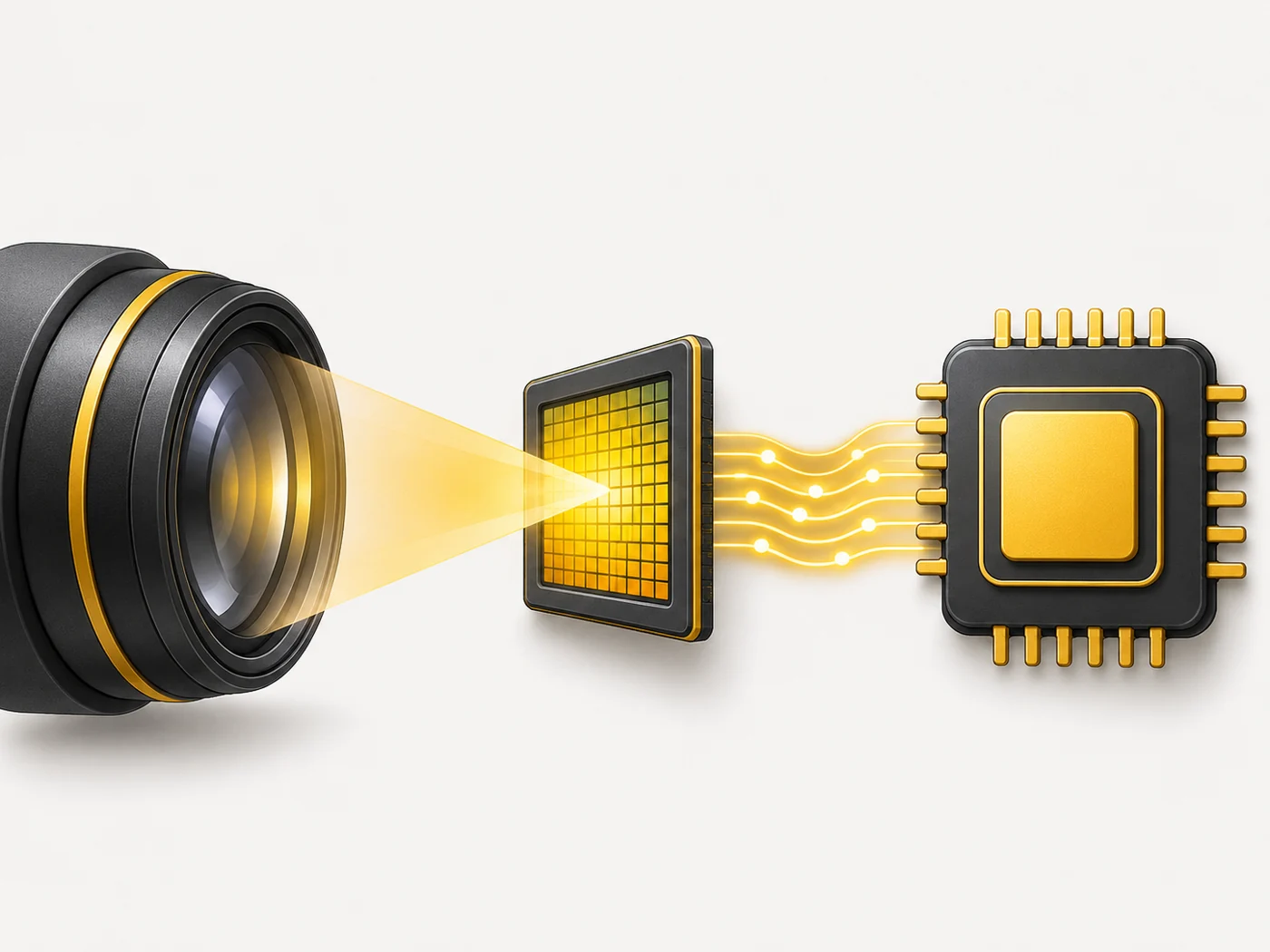
- The lens focuses light onto the sensor.
- Each photodiode pixel turns light into an electric charge.
- Colour filters (a Bayer pattern) let different colours through.
- Circuitry reads the charge from the pixels and turns it into numbers.
- The ISP processes this data and creates the photo.
Where you'll see it
Well-known makers of phone sensors are Sony (the LYTIA and IMX series), Samsung (ISOCELL) and OmniVision. Camera specs sometimes give the sensor model and size: "Sony LYT-900, 1-inch".
Does it matter when buying
The sensor model and size are useful clues when choosing a camera phone. Large modern Sony and Samsung sensors usually give better night shots. But without good processing, even a top sensor will not save the day.
Myths
- Myth: CMOS is worse than old CCD sensors. Reality: Modern CMOS overtook CCD on most counts long ago.
- Myth: Megapixels are a sensor's main spec. Reality: Sensor and pixel size often matter more.
FAQ
What is a BSI sensor?
A back-side illuminated sensor where the wiring does not block the light - it is more sensitive.
What is a stacked sensor?
A multi-layer sensor with fast memory - faster readout and less distortion with motion.
Can I find out the sensor model?
Sometimes from specs or reviews, or with camera analysis apps.
Related terms
Camera sensor size, Image signal processor (ISP), Pixel, Pixel binning