
Digital compass in a phone: how it finds north
A digital compass (magnetometer) is a sensor that measures the Earth's magnetic field along three axes and works out which way a phone or watch is pointing. It helps maps show which way you are facing and works without internet.
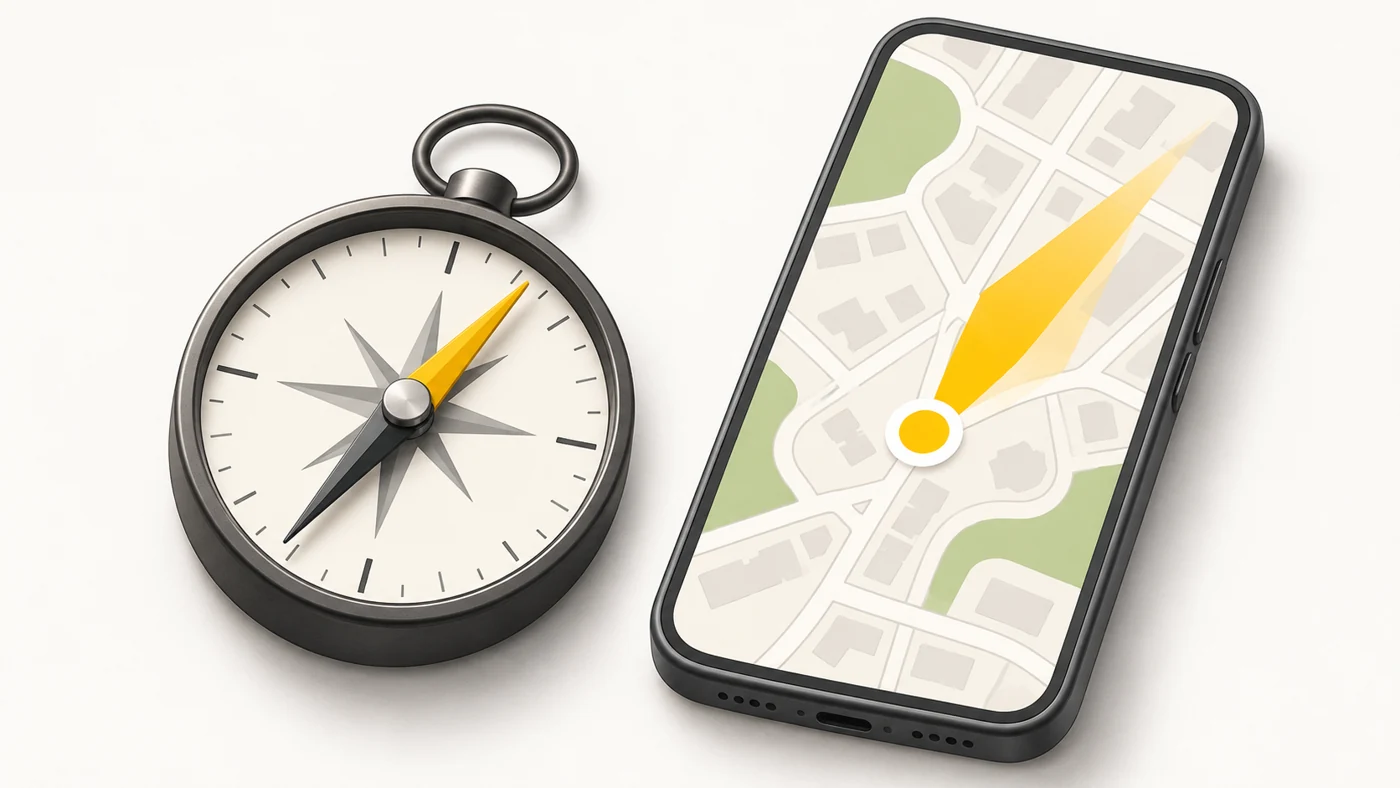
In plain words
An ordinary compass is a needle that the Earth's magnetic field swings to north. A digital one works on the same idea, except that instead of a needle a microchip feels the "pull" of the magnetic field and reports it as numbers. And just like a needle, it gets thrown off near magnets and iron.
How it works
- The magnetometer measures the strength of the magnetic field in three directions.
- The accelerometer tells it how the device is tilted.
- Together they calculate the direction of magnetic north.
- Maps use this to turn the direction "cone".
- Magnets, metal and nearby electronics distort the readings.

Where you'll see it
In most phones and in outdoor and sports watches. In our watch comparisons, the Sensors row (compass). In apps: the built-in Compass and maps.
Does it matter when buying
For hiking, orienteering and navigating on foot it is very useful. If the arrow in your maps points the wrong way, calibrate the compass - usually by moving the phone in a figure of eight. Magnetic mounts and cases can interfere.
Myths
- Myth: A digital compass works via GPS. Reality: It measures the magnetic field directly; GPS is a separate sensor.
- Myth: The compass shows true north. Reality: It shows magnetic north; apps can correct for declination.
FAQ
How do I calibrate the compass?
Move the phone in a figure of eight or follow the prompt in your maps app.
Why does the compass go wrong?
Magnets, metal, cases with magnets or nearby electronics.
Does the compass work without internet?
Yes.
Related terms
Inertial measurement unit (IMU), GNSS (GPS, Galileo, BeiDou), MEMS sensors, Barometer