
ECG on a smartwatch: what it measures and how it helps
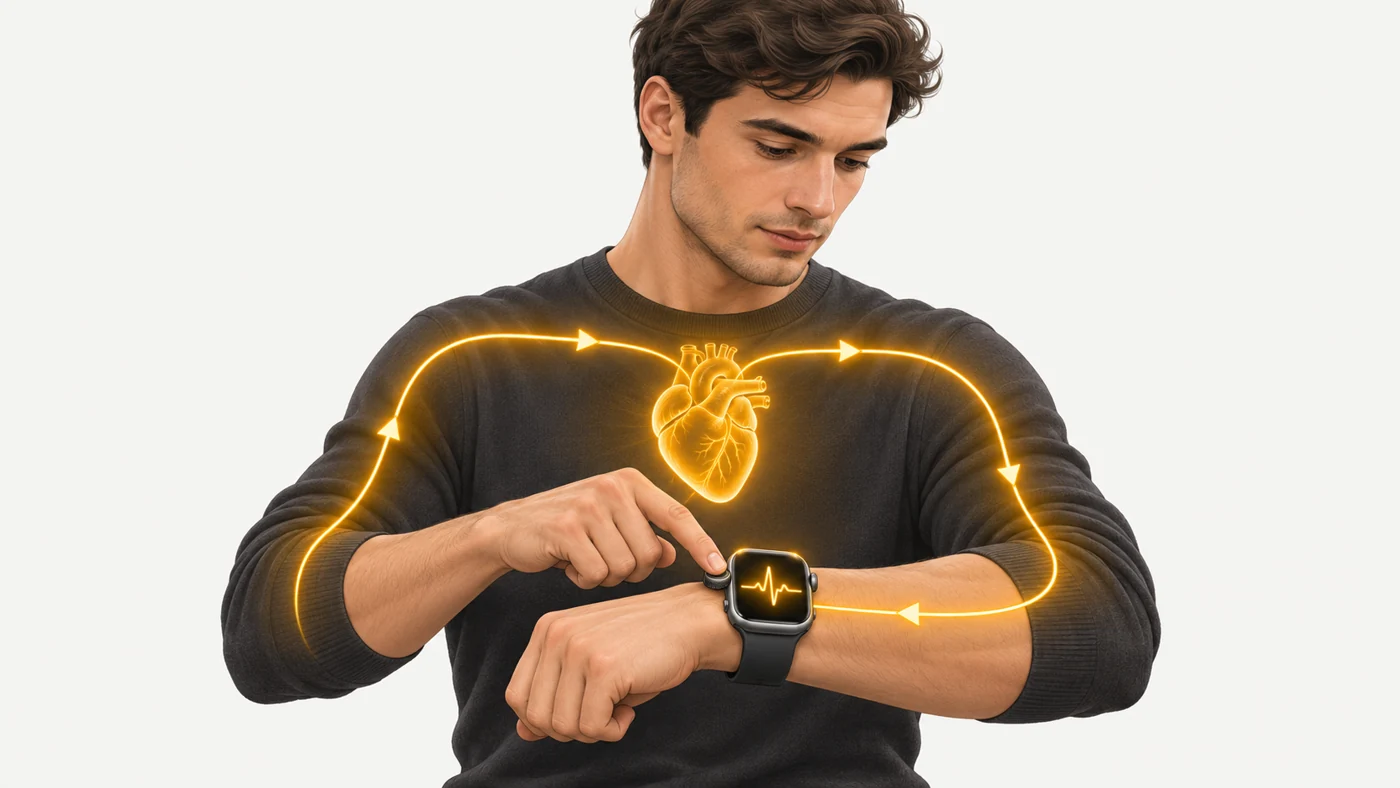
An ECG (electrocardiogram) on a watch is a feature that records the heart's electrical activity when you touch a sensor on the case with your finger. It is a single-lead ECG that can detect signs of atrial fibrillation, but it does not replace a full medical check-up.
In plain words
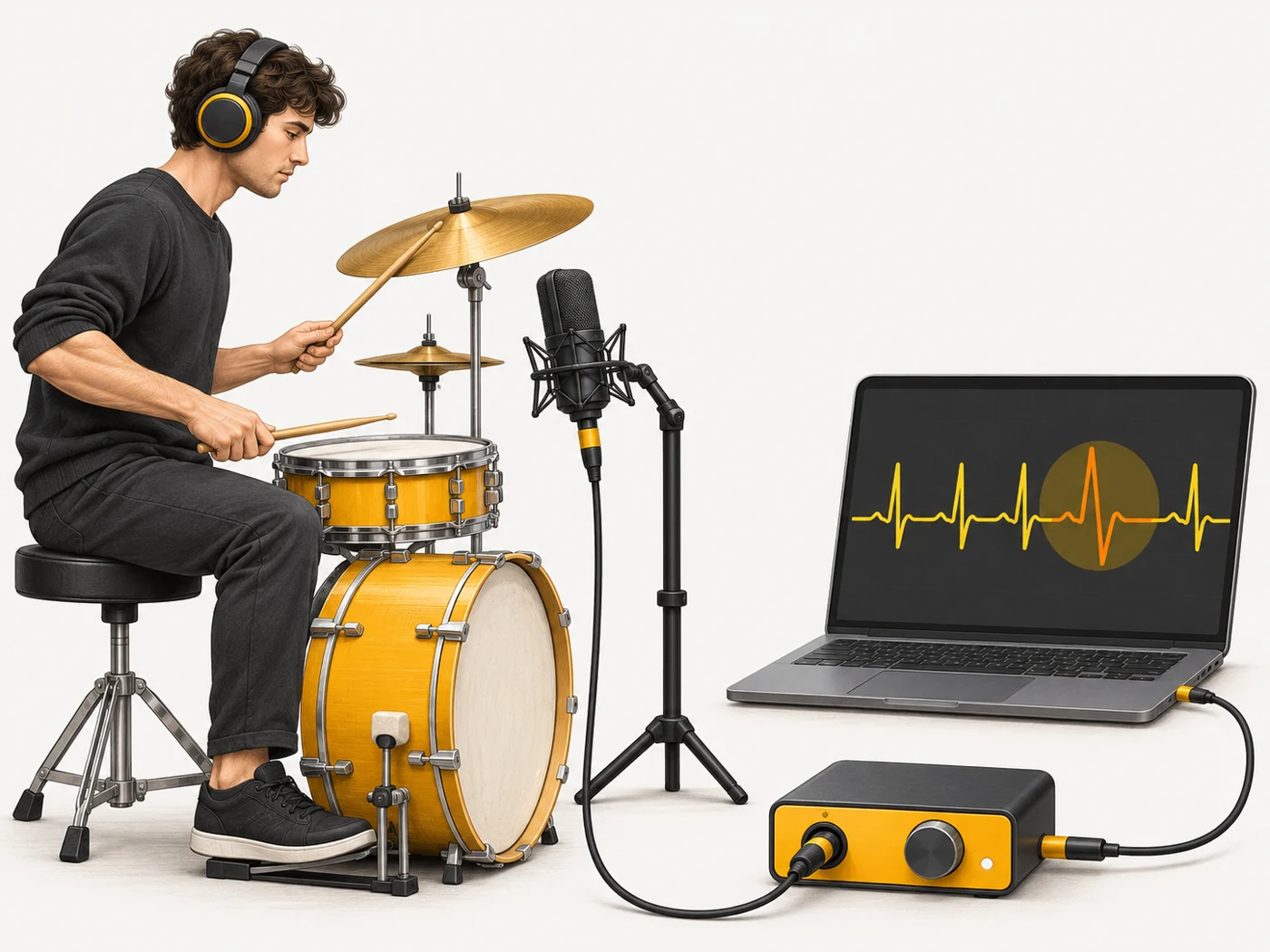
The heart works like a drummer kept in time by an electrical signal. A hospital ECG is like recording the whole orchestra with twelve microphones. A watch ECG is like recording with one microphone: less detail, but enough to notice that the drummer sometimes loses the beat.
How it works
- One electrode on the back of the watch touches your wrist.
- The other is in the crown or a button; you touch it with a finger of your other hand.
- This closes a circuit, and the watch measures the heart's electrical signals.
- The recording takes about 30 seconds.
- An algorithm analyses the rhythm and shows the result: sinus rhythm, possible fibrillation and so on.
Where you'll see it
ECG is available on Apple Watch (Series 4 and later, except SE), Samsung Galaxy Watch and some Withings, Fitbit and Garmin models. Availability depends on the country, because the feature needs medical approval. Check whether it is available for your specific model and country.
Does it matter when buying
If you suspect heart rhythm problems or want to keep an eye on your heart, the feature can be useful: sometimes a watch spots fibrillation the person did not know about. But any worrying results should be shown to a doctor. And remember that Samsung's ECG only works fully with Samsung phones.
Myths
- Myth: A watch ECG detects heart attacks. Reality: No, a single-lead ECG does not diagnose heart attacks. If you have chest pain, call an ambulance.
- Myth: The ECG runs all the time. Reality: A recording is made on request, when you touch the sensor.
FAQ
What is atrial fibrillation?
A common heart rhythm disorder that increases the risk of stroke and needs a doctor's advice.
Can I show the recording to a doctor?
Yes, you can usually export it as a PDF.
Why is the feature not available in my region?
It needs medical registration in each country.
Related terms
Optical heart rate sensor, Heart rate variability (HRV), SpO2 (blood oxygen)