
SpO2 on a watch: what blood oxygen level shows
SpO2 (oxygen saturation) is the percentage of haemoglobin in the blood that is carrying oxygen. Watches and bands estimate it optically, with red and infrared light through the skin. In a healthy person at rest it is usually 95-100%.
In plain words
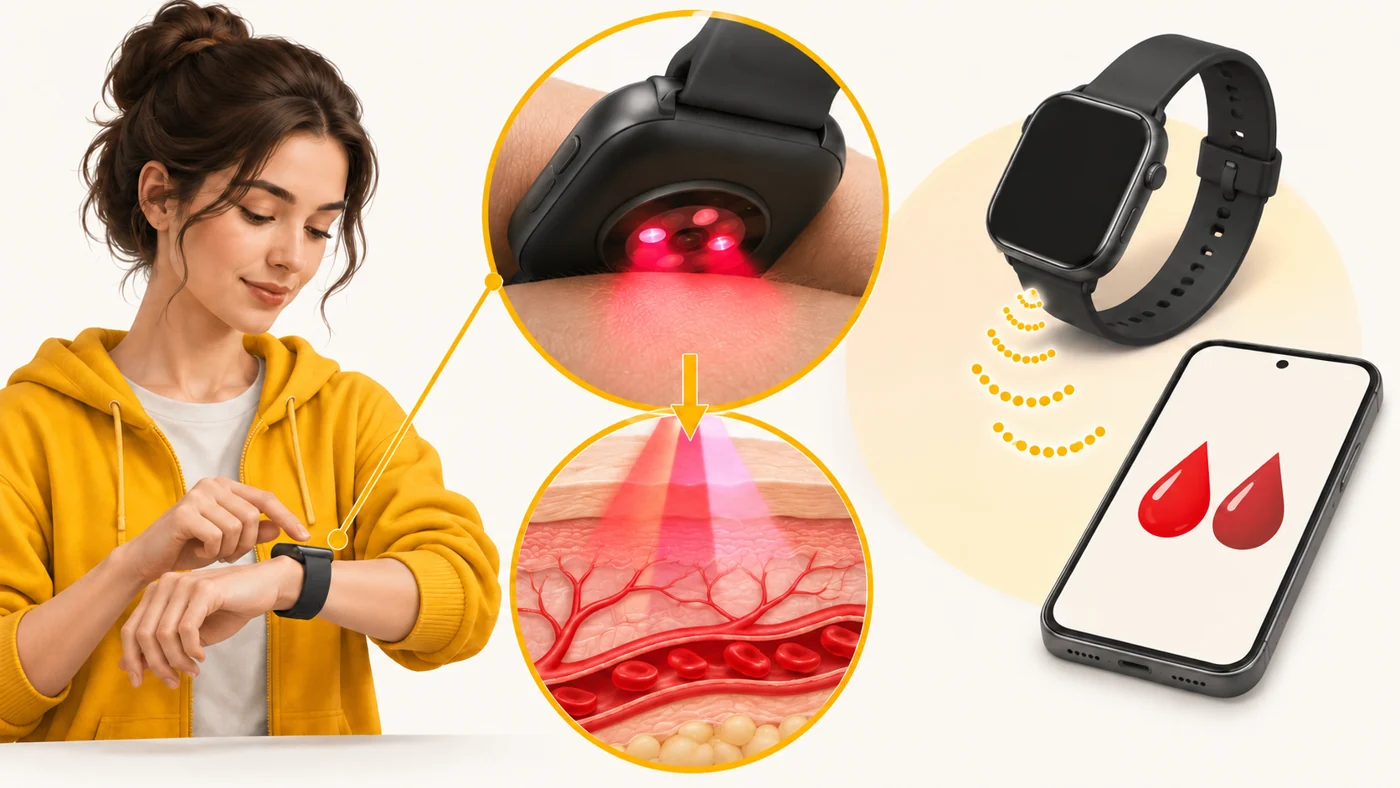
Blood rich in oxygen and blood low in oxygen have slightly different "shades" - like bright red and dark cherry paint. The sensor shines two colours of light onto the skin and compares how each is absorbed. From that comparison it estimates how much "bright red paint" is in the blood.
How it works
- The sensor emits red and infrared light.
- Oxygenated and deoxygenated haemoglobin absorb these colours differently.
- Photodiodes measure the reflected light.
- An algorithm calculates the ratio and converts it into an SpO2 percentage.
- For accuracy, you need to keep still during the measurement.
Where you'll see it
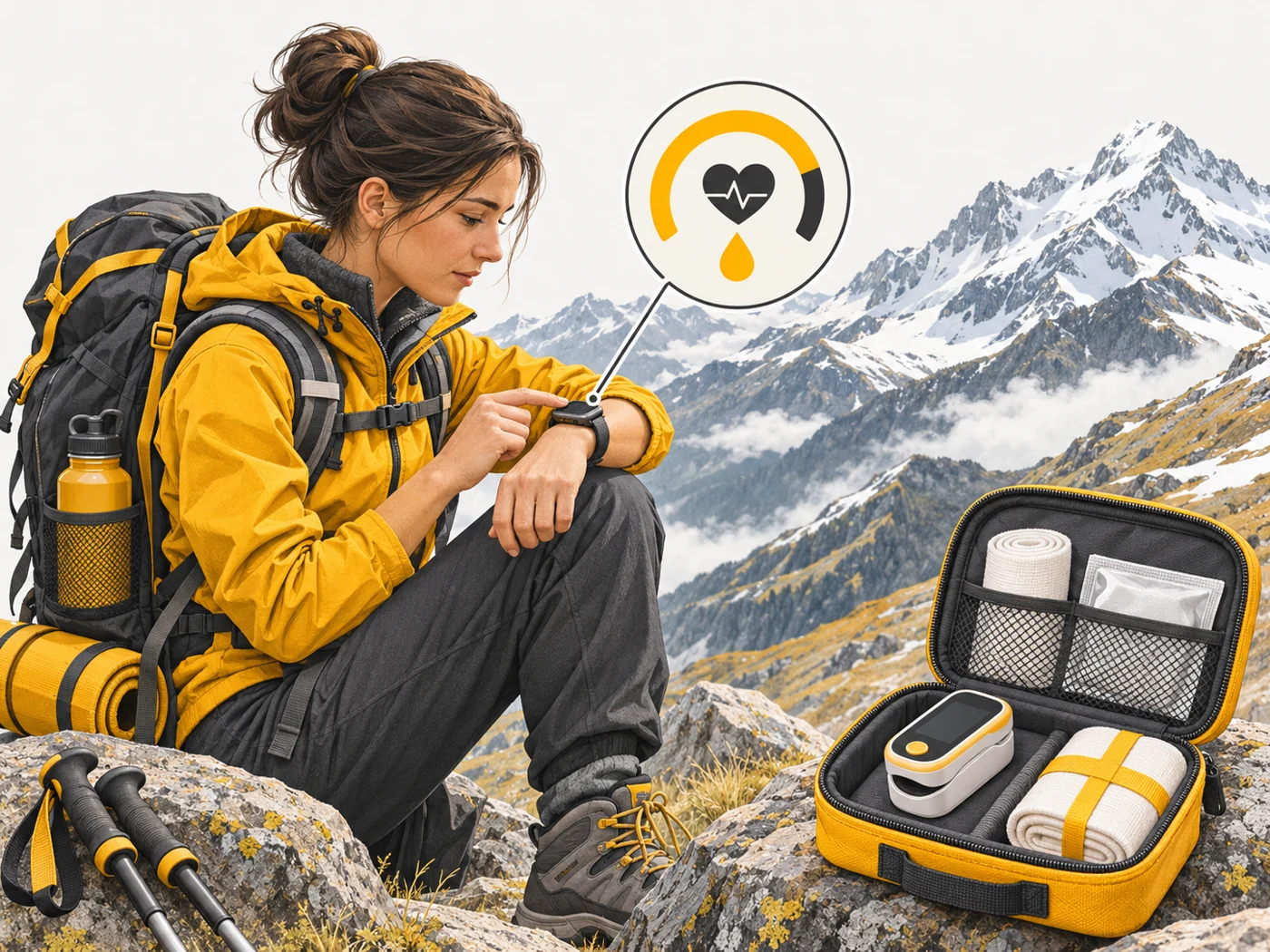
In most modern smartwatches and many fitness bands: Samsung, Huawei, Xiaomi, Garmin (Pulse Ox), Amazfit and others. In our watch comparisons, the Sensors row. Medical pulse oximeters measure on the finger and are more accurate.
Does it matter when buying
As a guide for sleep, altitude acclimatisation and general well-being, it is useful. But a watch is not a medical device: if you feel unwell, are short of breath or see low readings, use a certified pulse oximeter and see a doctor.
Myths
- Myth: A watch replaces a pulse oximeter. Reality: No, watches are less accurate and depend on many factors.
- Myth: One low reading at night is cause for alarm. Reality: Isolated low readings are often due to movement or position; look at trends and how you feel.
FAQ
What is a normal SpO2?
Usually 95-100% at rest, but a doctor should assess your condition.
Why is SpO2 lower at night?
Because of your position, arm movement and sometimes breathing problems during sleep - if in doubt, consult a doctor.
Does a watch measure SpO2 all the time?
Often only at night or on request, to save battery.
Related terms
Optical heart rate sensor, Sleep tracking, ECG on a watch