
Optical heart rate sensor in a watch: how it measures your pulse with light
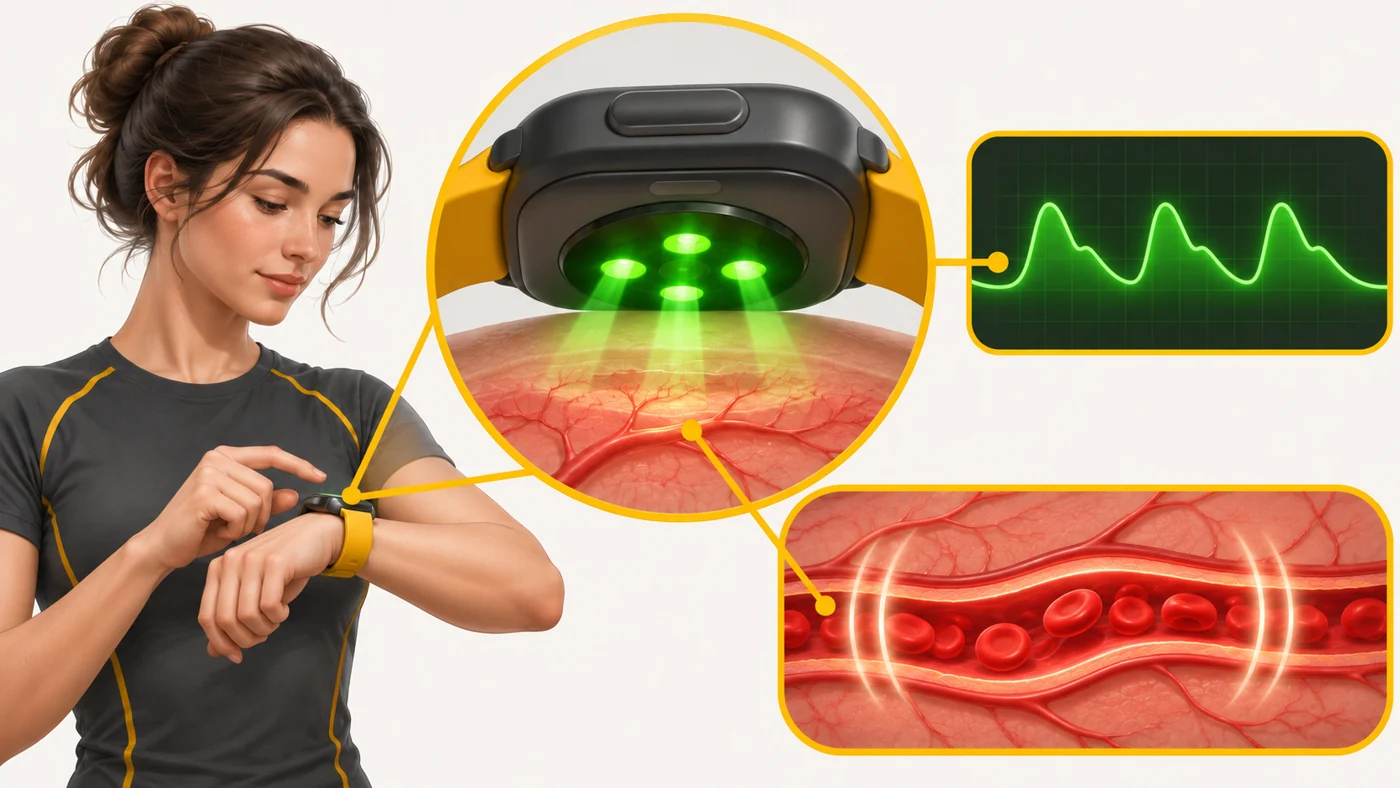
An optical heart rate sensor (PPG, photoplethysmography) is a sensor on the back of a watch or band that shines green (and other) LEDs into the skin and works out your heart rate from the reflected light.
In plain words
Blood is red, and red absorbs green light well. With every heartbeat, the vessels under your skin fill slightly with blood - and absorb more green light. The sensor sees these rhythmic "winks" of reflected light and counts them, like counting waves rolling onto a beach.
How it works
- LEDs light up the skin with green light.
- Photodiodes measure how much light is reflected back.
- With each heartbeat, the amount of reflected light changes slightly.
- An algorithm extracts the rhythm from this signal and counts beats per minute.
- The accelerometer helps filter out noise from arm movements.
Where you'll see it
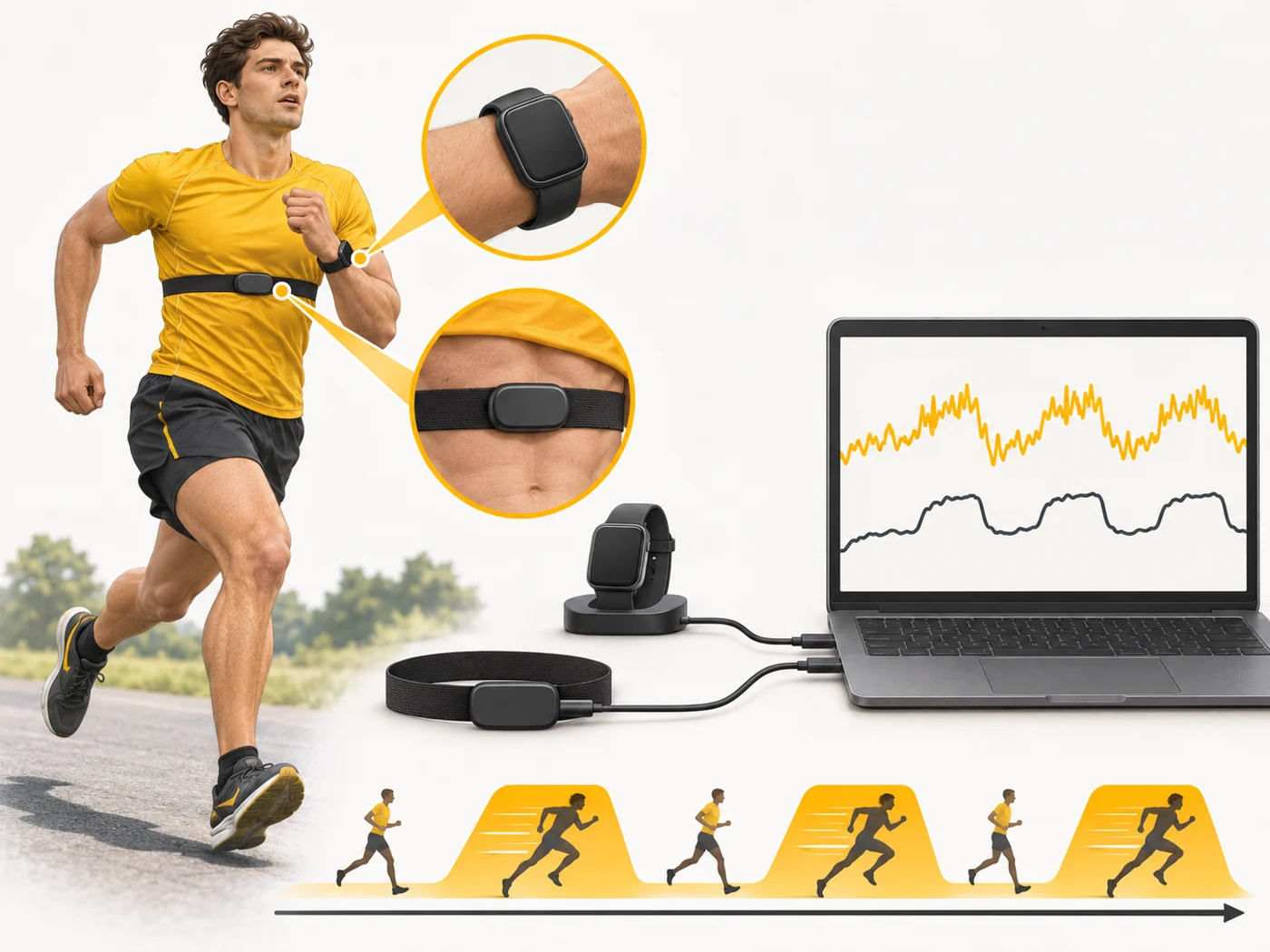
In every modern smartwatch and fitness band, as well as some earbuds and rings. In our watch comparisons, the Sensors row: "heart rate, SpO2, barometer…". Chest straps that measure the heart's electrical activity are sold separately.
Does it matter when buying
For everyday heart rate, sleep and moderate workouts, an optical sensor is enough. For intervals, strength training and precise analysis, a chest strap is better - an optical sensor "lags" and makes mistakes with sudden movements. Wear the watch snugly, a couple of fingers above the wrist bone.
Myths
- Myth: A watch measures heart rate like a doctor. Reality: It is not a medical device; accuracy is good, but there are errors.
- Myth: Tattoos and darker skin make no difference. Reality: Tattoos and some skin factors can reduce accuracy.
FAQ
Why does the heart rate on my watch jump during workouts?
The watch moves on your wrist, and sudden movements interfere with the sensor.
Which is more accurate - a watch or a chest strap?
A chest strap is usually more accurate, especially in intense workouts.
Can heart rate be measured through a sleeve?
No, the sensor must sit snugly against the skin.
Related terms
SpO2 (blood oxygen), ECG on a watch, Heart rate variability (HRV), ANT+