
PoE: power and internet over one cable
PoE (Power over Ethernet) is a technology that sends electrical power over a regular network cable together with data. The device gets both internet and power from one wire, with no separate socket.
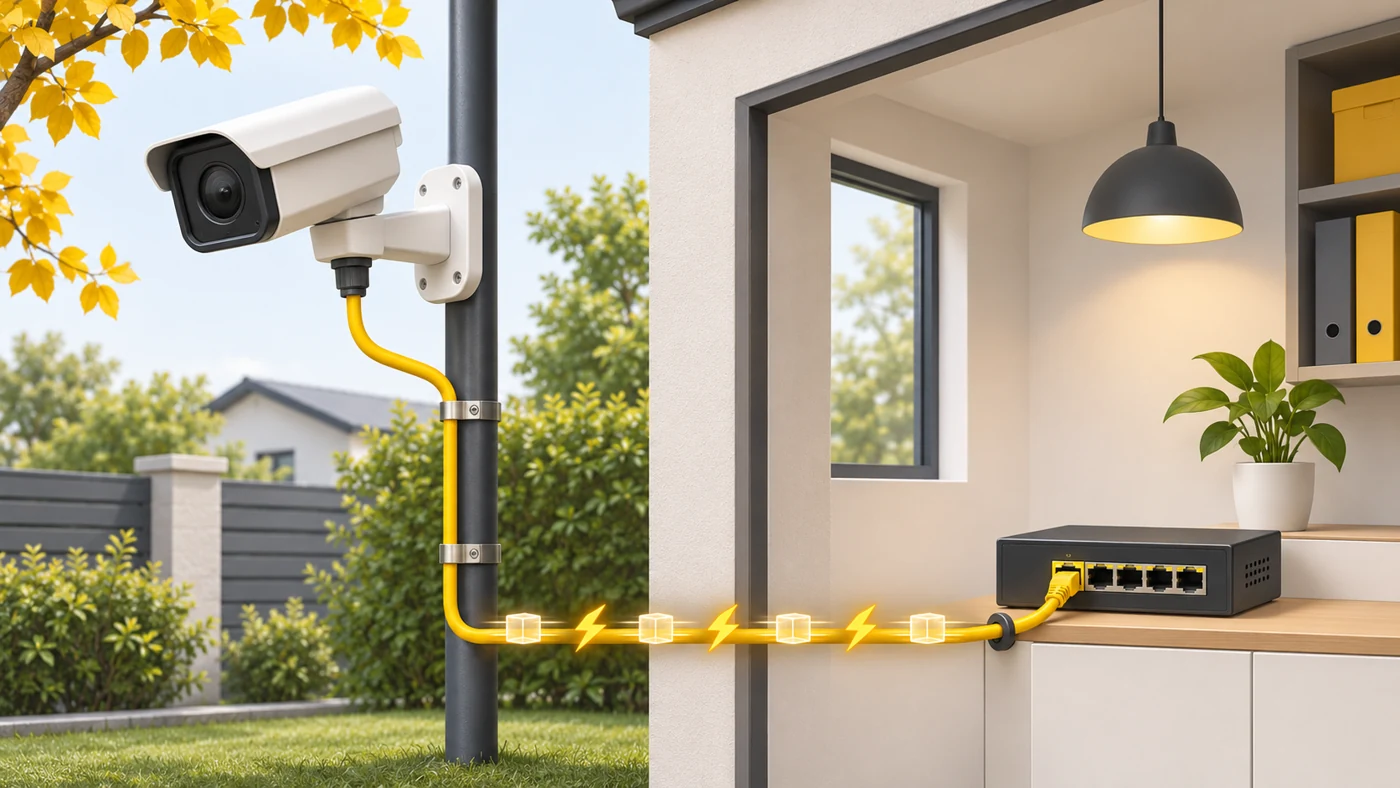
In plain words
Imagine a garden hose that carries water and Morse code messages at the same time. You do not need to run two hoses. PoE is that kind of "hose" for devices: a camera on a pole or a Wi-Fi access point on the ceiling does not need a socket nearby - everything comes through one cable.
How it works
- A PoE switch, router or injector puts power onto the network cable.
- The device at the other end checks whether it supports PoE and draws the power it needs.
- Data and power travel over the same wires in the cable.
- The PoE, PoE+ and PoE++ standards deliver different power levels - from 15 to 90 W.
- Regular devices without PoE simply work as usual, without receiving power.

Where you'll see it
IP security cameras, ceiling-mounted Wi-Fi access points, IP phones, intercoms, some mesh nodes and small computers. Switches and routers are labelled "PoE" with a total power budget.
Does it matter when buying
It is very convenient for outdoor cameras and ceiling access points: fewer wires and sockets. During power cuts it is also an advantage: one UPS next to a PoE switch powers both the cameras and the access points. Check the switch's power budget so it covers all your devices.
Myths
- Myth: PoE can fry a regular laptop. Reality: Standard PoE checks the device first and does not supply power to anything that does not support it.
- Myth: PoE works at any distance. Reality: Usually up to 100 metres of cable.
FAQ
What is a PoE injector?
A small adapter that adds power to the cable if your router has no PoE.
How much power does PoE deliver?
PoE up to 15 W, PoE+ up to 30 W, PoE++ up to 60-90 W per port.
Can a router be powered over PoE?
Some models support PoE power, but most home routers do not.