
Super AMOLED and Dynamic AMOLED: what Samsung's screen names mean
Super AMOLED is Samsung's brand name for AMOLED screens in which the touch layer is built right into the display. Dynamic AMOLED 2X is the next generation, with HDR10+ and an adaptive refresh rate of up to 120 Hz.
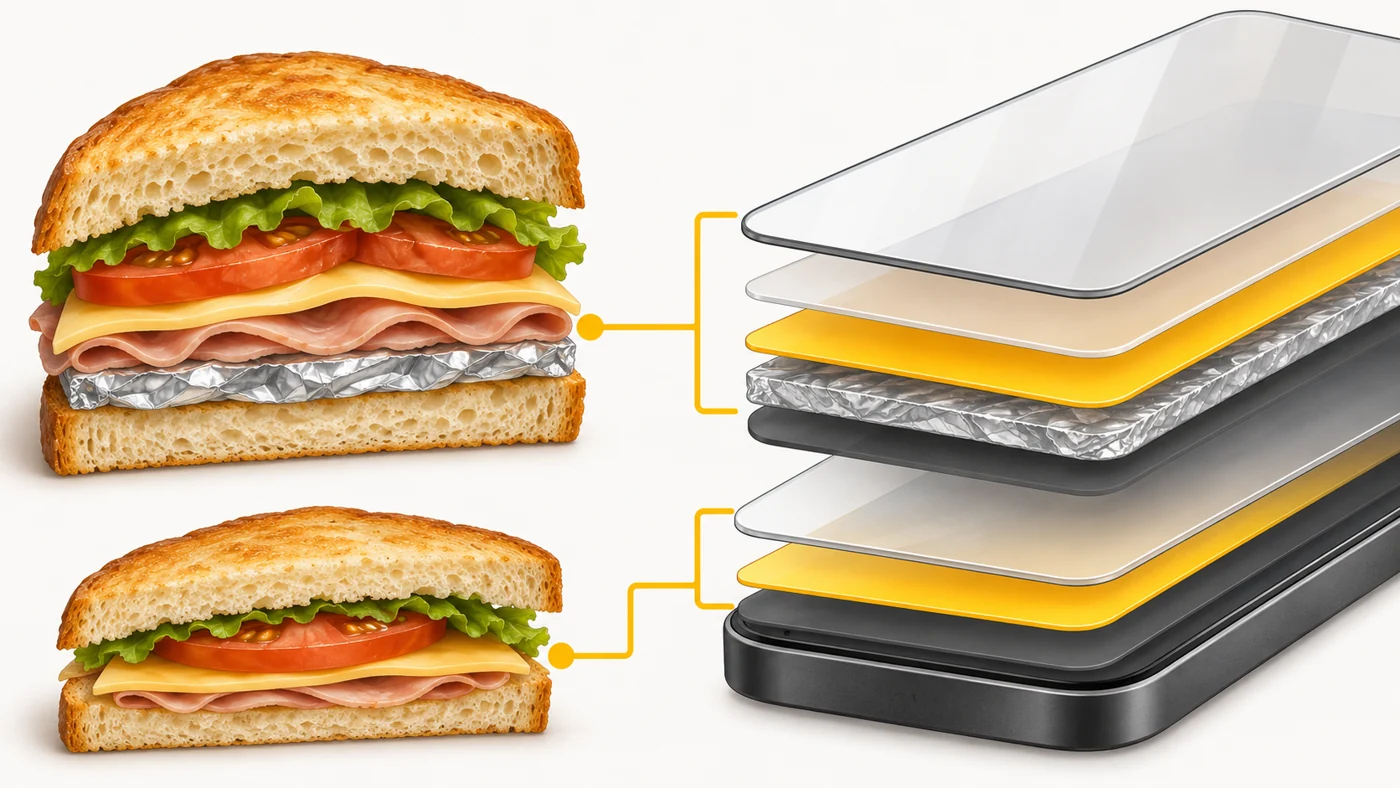
In plain words
An ordinary touchscreen is like a sandwich with a layer of foil between the bread and the filling: thicker and less clear. Super AMOLED is like a sandwich without the foil: the touch sensor is built into the "filling" itself, so the screen is thinner, brighter and less reflective.
How it works
- The base is AMOLED: every pixel lights up on its own.
- The touch layer is integrated into the display rather than laid on top.
- Fewer layers mean less glare and higher brightness in sunlight.
- Dynamic AMOLED adds HDR10+ and reduced blue light.
- Dynamic AMOLED 2X adds an adaptive refresh rate of up to 120 Hz.
Where you'll see it
In Samsung Galaxy phones and tablets (the A series uses Super AMOLED; the S and Tab S series use Dynamic AMOLED 2X) and in Galaxy Watch. Other brands also use similar Samsung Display panels. In our comparisons, the Display row.
Does it matter when buying
These are marketing names, not separate technologies. Compare the real specs: brightness, refresh rate, PWM and resolution. Dynamic AMOLED 2X usually gives better smoothness and HDR than the Super AMOLED in budget models.
Myths
- Myth: Super AMOLED is a fundamentally different technology. Reality: It is AMOLED with a built-in touch sensor and a brand name.
- Myth: Dynamic AMOLED 2X is always 120 Hz on every device. Reality: The refresh rate depends on the specific model.
FAQ
How is Super AMOLED different from AMOLED?
It has an integrated touch layer and usually better brightness.
What does "2X" mean in Dynamic AMOLED 2X?
The generation with an adaptive refresh rate.
Does Super AMOLED burn in?
Like any OLED, in theory yes, but modern panels are more resistant.
Related terms
AMOLED, OLED, LTPO, HDR, HDR10+ and Dolby Vision