
AMOLED screen: what it is and how it beats IPS
AMOLED (active-matrix organic light-emitting diode) is an OLED screen with an active matrix, where every pixel is a tiny organic LED that emits its own light and is controlled individually by a transistor. Most modern smartphones and watches use these screens.

In plain words
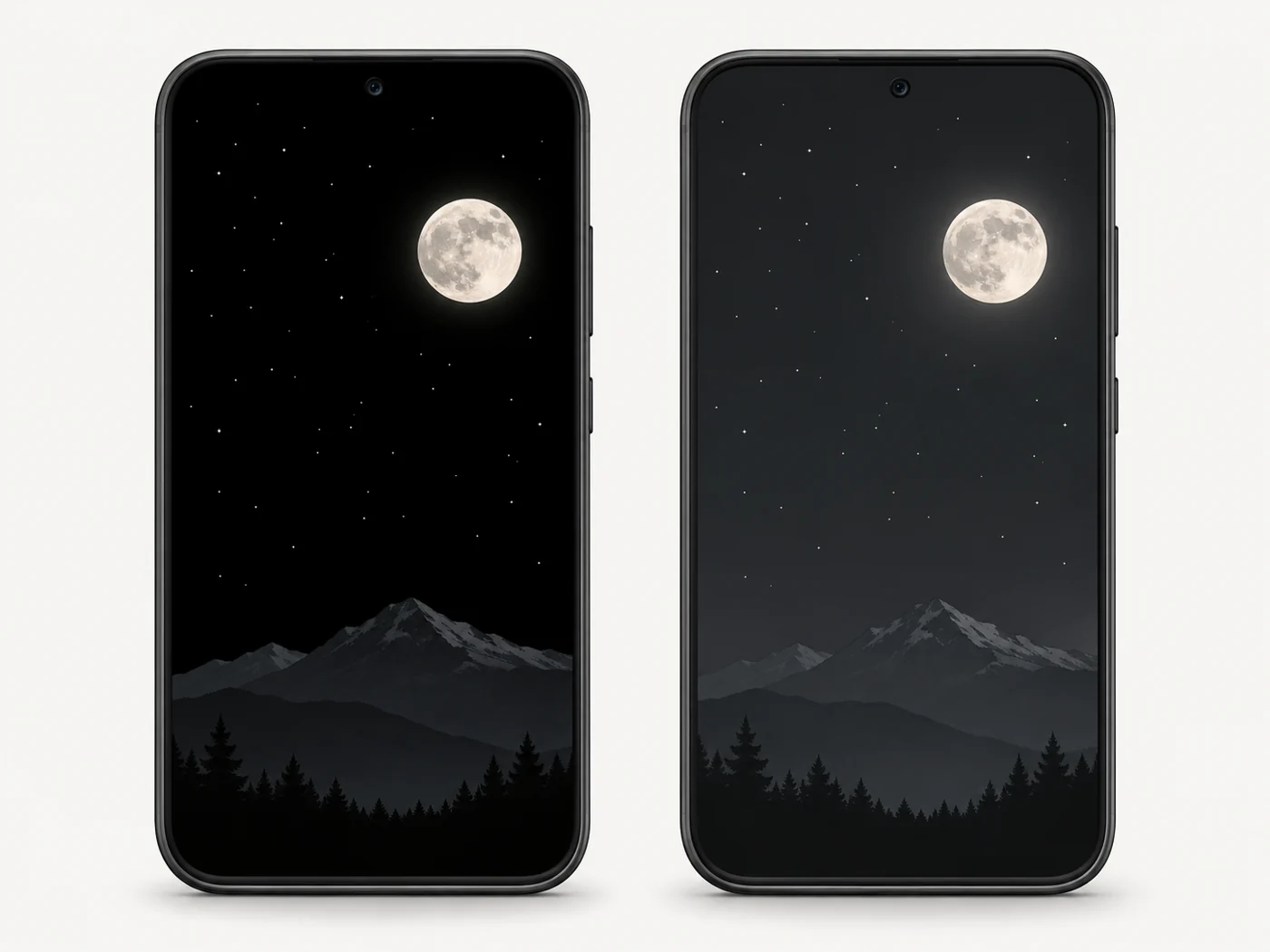
An IPS screen is like a stained-glass window lit from behind by a lamp: even the black pieces let a little light through. AMOLED is like a mosaic of millions of tiny lights: to show black, a light simply switches off. That is why black really is black - and a dark theme saves battery too.
How it works
- Each pixel is made of red, green and blue organic LEDs.
- An active matrix of transistors controls the brightness of each one.
- A black pixel is completely off and uses no power.
- Brightness at low levels is often controlled with PWM flicker.
- Over time the organic materials slowly wear out, so burn-in is possible.
Where you'll see it
In the specs of phones, watches and tablets: "AMOLED", "Super AMOLED", "Dynamic AMOLED 2X", "OLED". In our comparisons, the Display row. AMOLED is also used in laptops, game consoles and TVs (OLED).
Does it matter when buying
For a smartphone, yes - AMOLED gives vivid colours, deep contrast, an always-on display and thin bodies. Downsides: possible flicker (PWM) for sensitive eyes and a risk of burn-in from static elements after years of use. IPS is fine for budget models, but I would choose AMOLED if the price difference is small.
Myths
- Myth: AMOLED burns in quickly. Reality: Modern screens burn in far more slowly than early ones, and with normal use it is rare.
- Myth: AMOLED and OLED are different technologies. Reality: AMOLED is a type of OLED with an active matrix; in phones the terms are almost interchangeable.
FAQ
Does a dark theme save battery?
On AMOLED, yes - especially with a pure black background.
What is burn-in?
A lingering image from static elements that were shown on the screen for years.
How is AMOLED different from Super AMOLED?
In Super AMOLED the touch layer is built into the display, making it thinner and brighter.
Related terms
OLED, Super AMOLED, IPS, LTPO, PWM flicker and DC dimming