
IPS screen: what it is and how it differs from AMOLED
IPS (in-plane switching) is an LCD technology in which the liquid crystals rotate parallel to the screen surface. This gives accurate colours and wide viewing angles. An IPS screen has a separate backlight behind it.
In plain words
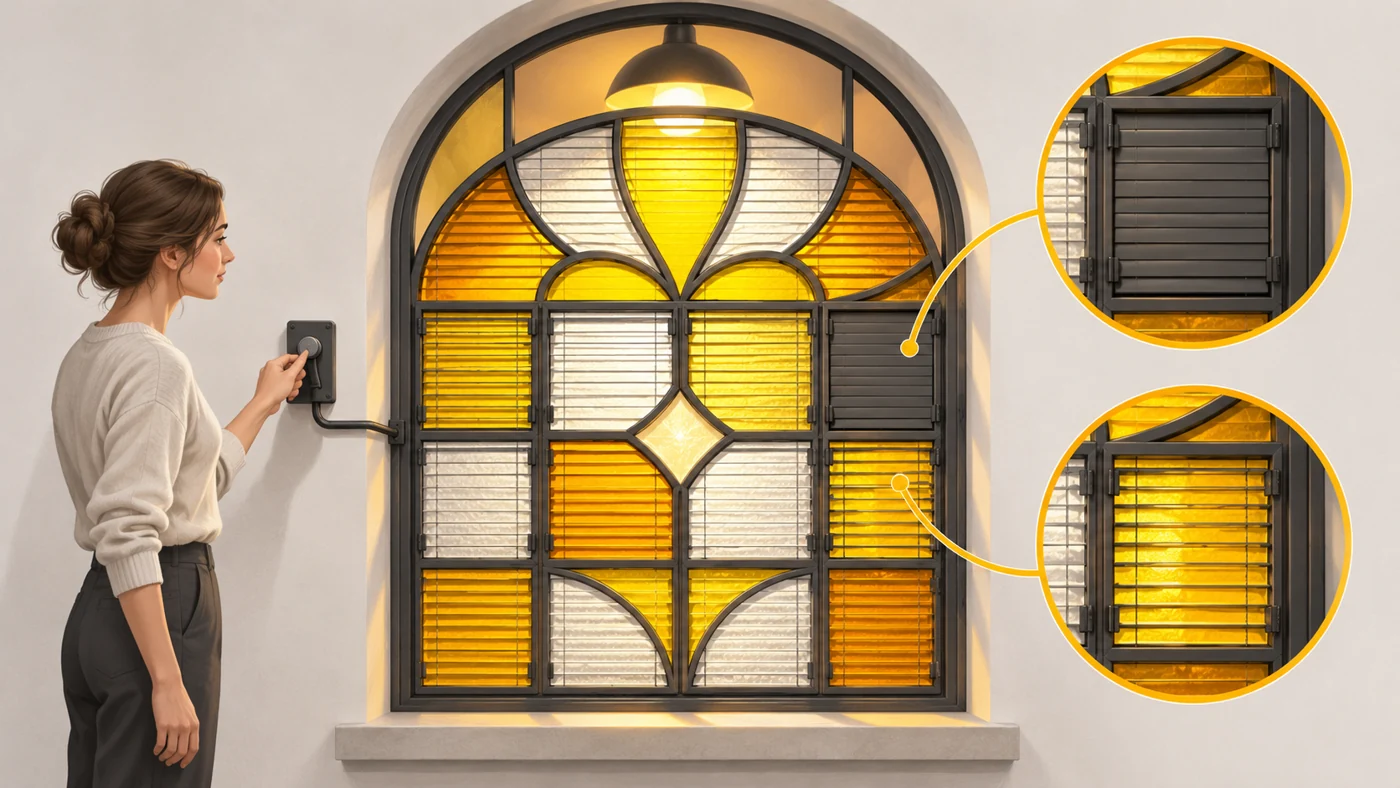
IPS is like stained glass lit from behind: the lamp's light passes through the coloured glass, while the liquid crystals act like mini blinds that open or close each "pane". Colours look nice, but the blinds never close completely - so black is slightly greyish, especially in the dark.
How it works
- A white backlight shines from behind the screen.
- Liquid crystals rotate to control how much light gets through.
- Colour filters turn the light into red, green and blue.
- In IPS the crystals rotate in the plane of the screen, so colours do not shift at an angle.
- The backlight is always on, so black is not perfect.
Where you'll see it
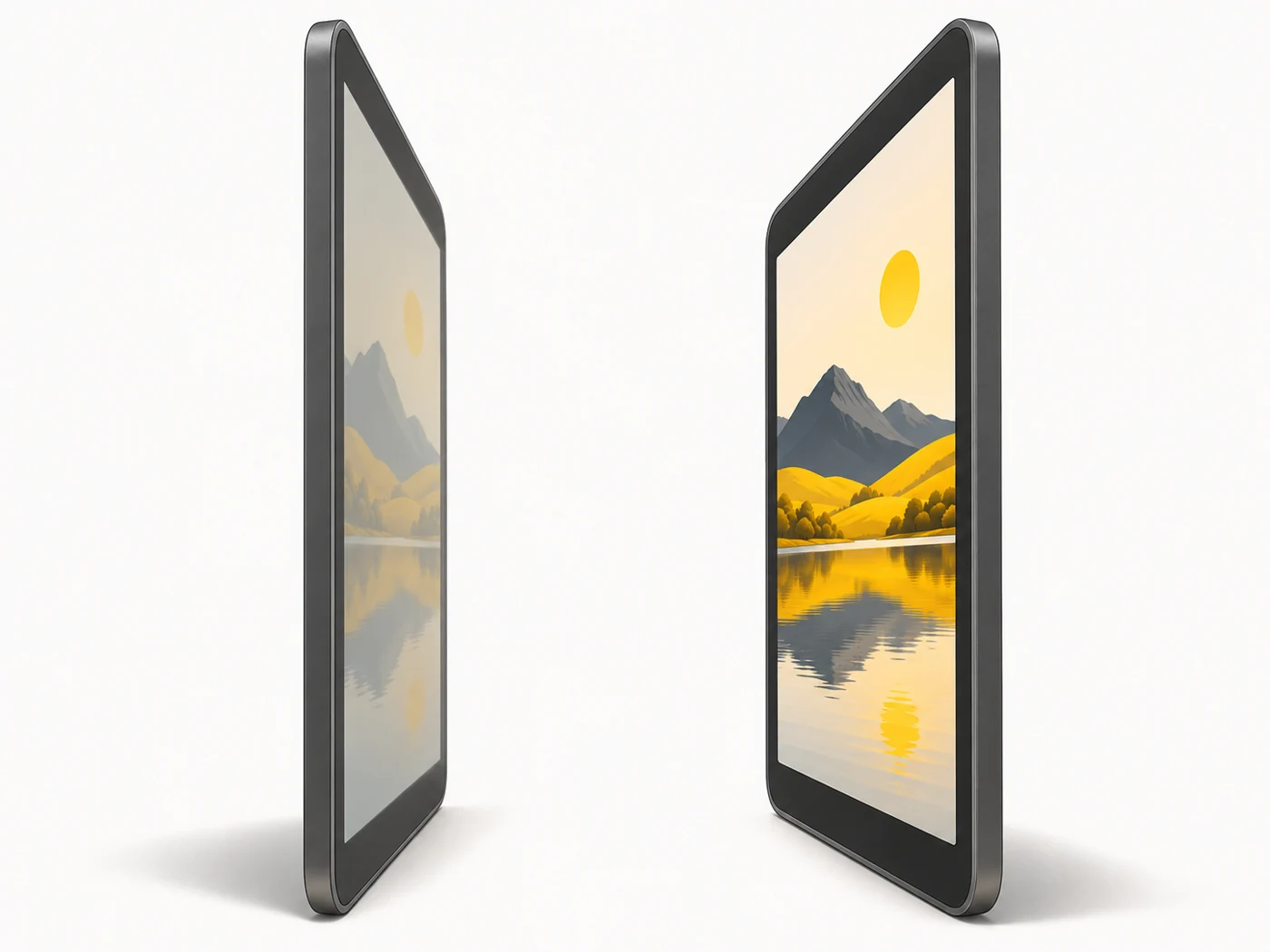
IPS is used in budget and mid-range phones, most tablets (including iPads without OLED), laptops and monitors. Specs say "IPS LCD". In our tablet comparisons, the Display row.
Does it matter when buying
IPS is a fine choice for a tablet, monitor or budget phone: no PWM flicker and no burn-in, and colours are accurate. The downsides compared with AMOLED are greyish blacks, lower contrast and a slightly thicker body. For films in the dark I would choose OLED; for working with text, IPS is perfectly fine.
Myths
- Myth: IPS is outdated technology. Reality: It is still popular in monitors, tablets and laptops thanks to its accuracy and durability.
- Myth: IPS is always worse than AMOLED. Reality: IPS is better for people sensitive to flicker, and it does not burn in.
FAQ
Does IPS flicker?
Usually not, or only minimally, though there are exceptions.
What is "IPS glow"?
A slight glow in the corners of the screen on dark backgrounds - a trait of the technology.
Does IPS burn in?
No, burn-in is an OLED problem.
Related terms
LCD, AMOLED, OLED, Mini-LED, Colour gamut (DCI-P3, sRGB)