
LCD screen: how liquid crystal displays work
An LCD (liquid crystal display) is a type of screen in which liquid crystals control how much light from the backlight passes through. LCD types include IPS, VA and TN, and modern backlights are LED or Mini-LED.
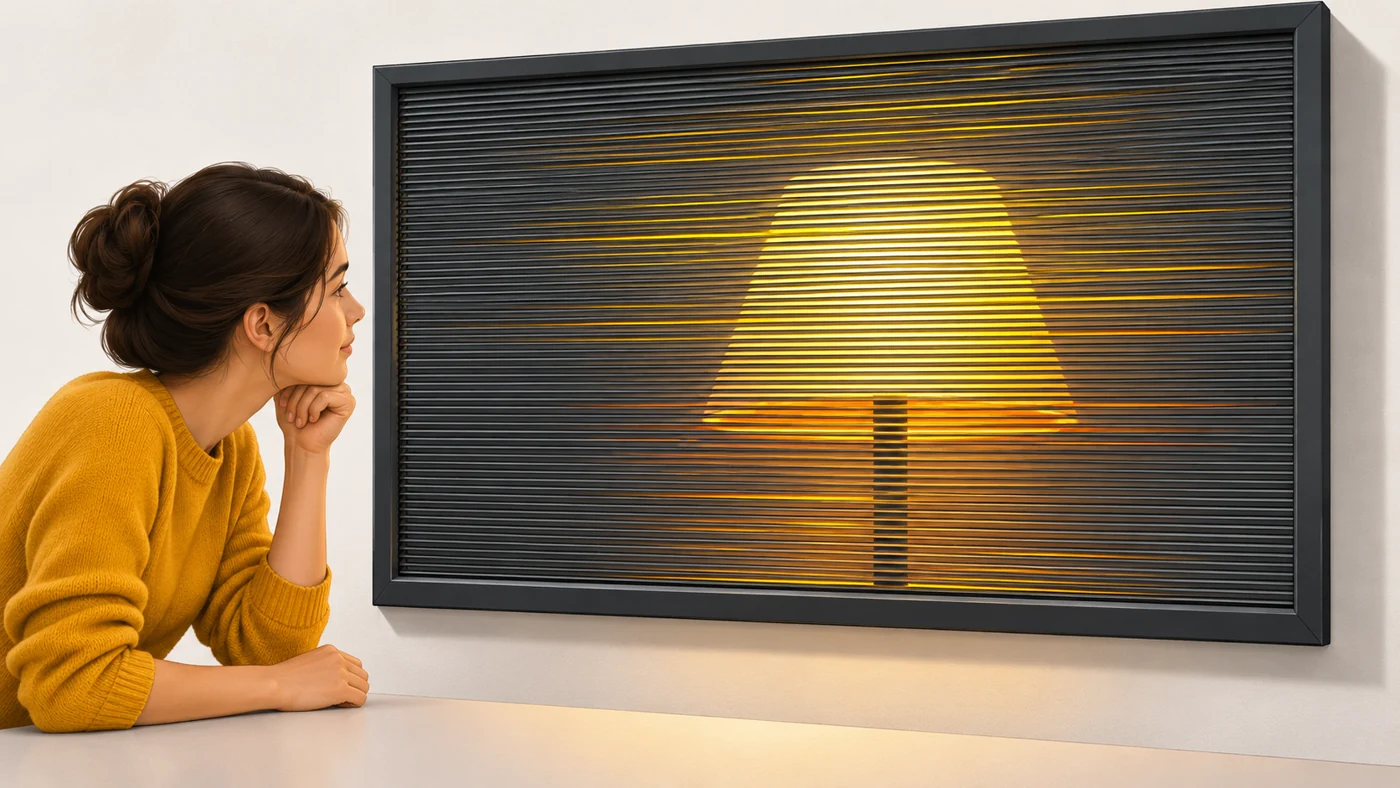
In plain words
An LCD is like a window with millions of tiny blinds in front of a lamp. The lamp is always on, and the blinds in each pixel open more or less to let the right amount of light through. Colour filters tint the light. That is why even "closed" blinds leak a little light - black is not perfect.
How it works
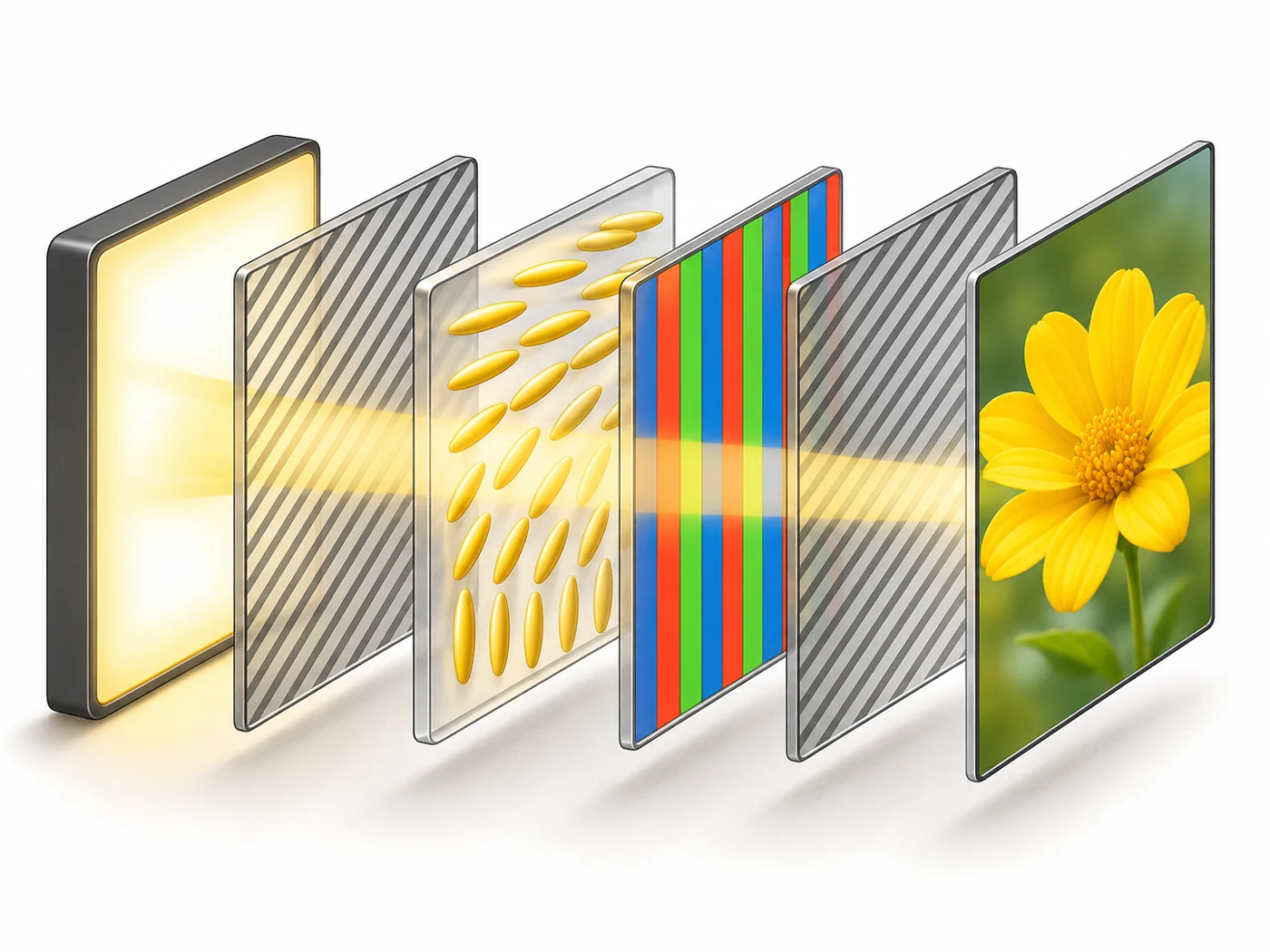
- A backlight - usually LEDs - shines from behind the screen.
- Polarising filters and liquid crystals control the light in each pixel.
- Colour filters create red, green and blue subpixels.
- The way the crystals are aligned (IPS, VA, TN) sets viewing angles and contrast.
- A Mini-LED backlight with dimming zones improves contrast.
Where you'll see it
LCD is used in budget phones and tablets (IPS LCD), most monitors and laptops, TVs (LED TVs are LCDs with an LED backlight) and gadgets with displays. In our comparisons, the Display row.
Does it matter when buying
LCD is a good choice for monitors, tablets and budget phones: durable, no burn-in and often flicker-free. For films in the dark, OLED gives better contrast. Among LCDs for phones and tablets, look for IPS.
Myths
- Myth: An LED TV is not an LCD. Reality: "LED" refers to the type of backlight in an LCD panel.
- Myth: All LCDs are the same. Reality: IPS, VA and TN differ a lot in colour, contrast and viewing angles.
FAQ
How is IPS different from VA?
IPS has better angles and colours; VA has better contrast.
Does LCD burn in?
No, though temporary image retention is possible.
Why is LCD thicker than OLED?
Because of the backlight layer.
Related terms
IPS, OLED, Mini-LED, TFT, Active matrix