
Phone display: what to look for when choosing
A display is the screen that shows a device's image. On phones, tablets and watches it is described by several specs: panel type (OLED, IPS), diagonal, resolution, refresh rate, brightness and cover glass.
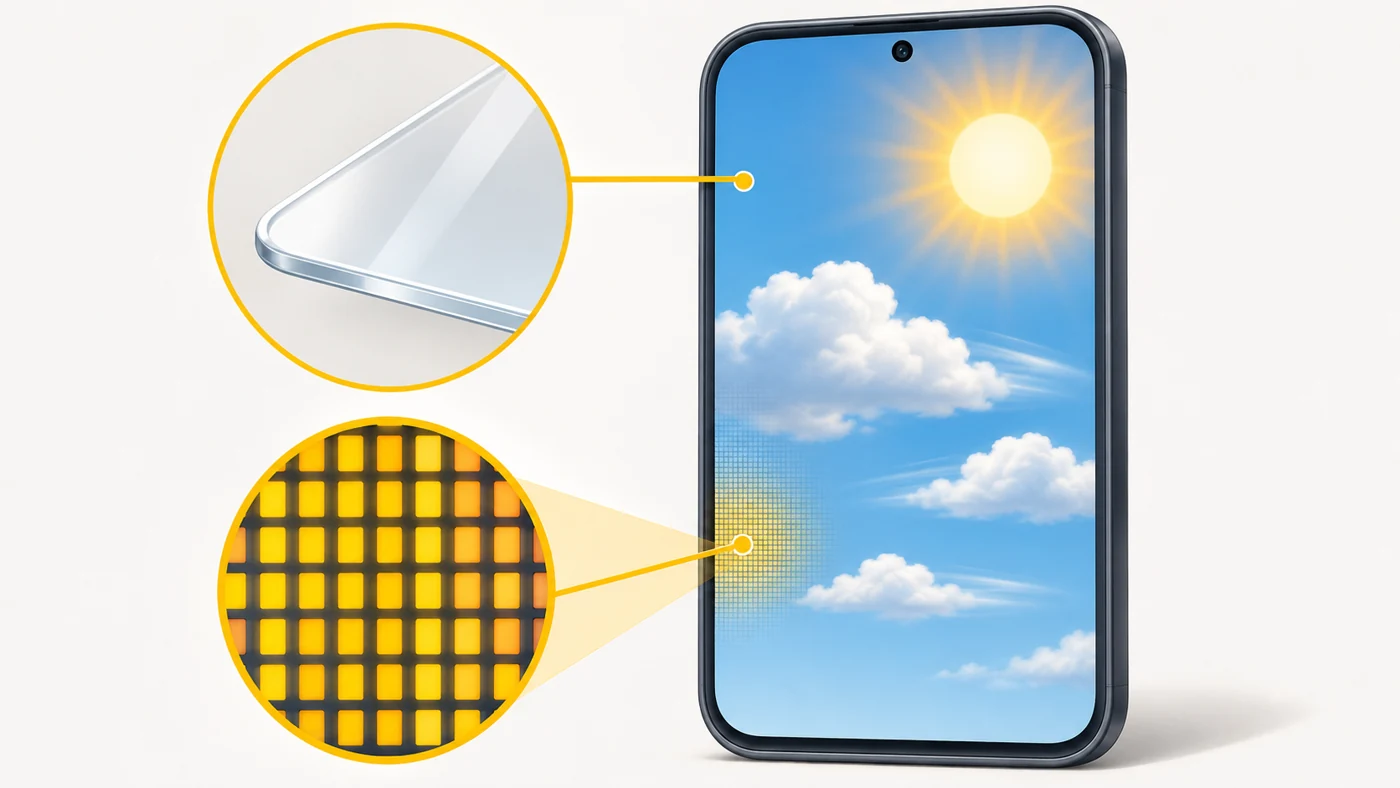
In plain words
A display is like a window into your phone. The panel type is what glass the window is made of, the diagonal is its size, the resolution is how fine the grid on the glass is, the refresh rate is how smoothly the clouds move outside, and the brightness is whether you can see anything when the sun is shining.
How it works
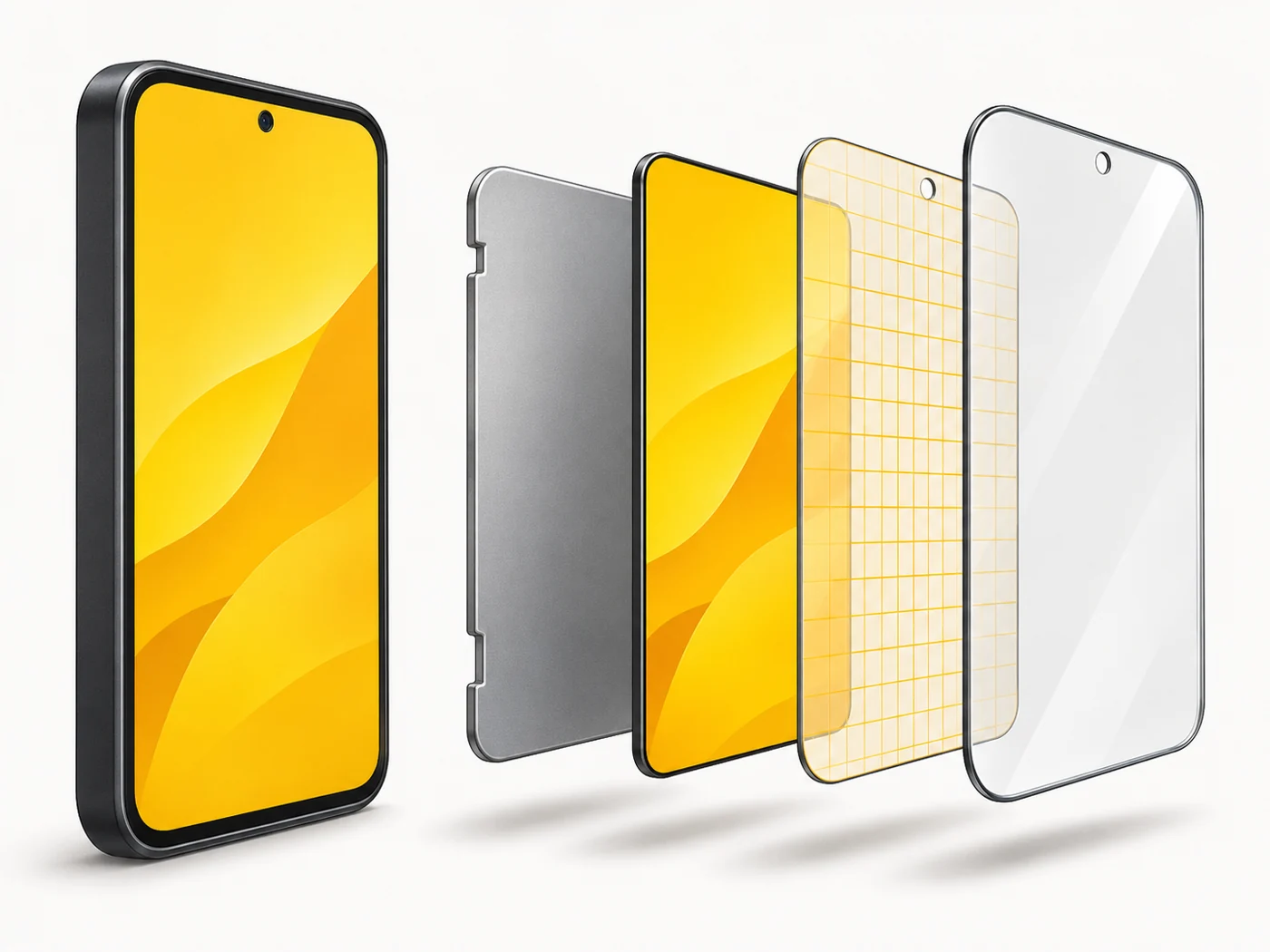
- The panel (OLED, IPS or another) builds the image from millions of pixels.
- A touch layer registers your finger taps.
- The controller and GPU refresh the picture tens or hundreds of times per second.
- An ambient light sensor adjusts brightness automatically.
- Cover glass on top protects the screen from scratches and knocks.
Where you'll see it
In specs: a line like "6.7-inch, AMOLED, 2400×1080, 120 Hz, 1800 nits, Gorilla Glass Victus 2". In our comparisons, the Display row.
Does it matter when buying
A lot - you look at the screen for hours every day. My checklist: OLED or a good IPS, a refresh rate of 90-120 Hz or more, at least 1000 nits for outdoors, at least Full HD for a phone, and eye comfort (high-frequency PWM if you are sensitive).
Myths
- Myth: A bigger diagonal is always better. Reality: A big phone is awkward in one hand and in a pocket.
- Myth: A 2K screen on a phone is noticeably sharper than Full HD. Reality: On a small diagonal the difference is minimal for most people.
FAQ
What matters more - resolution or refresh rate?
On a phone, 120 Hz smoothness is usually more noticeable.
Which screen is better for your eyes?
IPS without PWM, or OLED with high-frequency PWM and DC dimming.
Is a screen protector worth it?
If you like - it takes the hit instead of the screen.
Related terms
AMOLED, IPS, Screen refresh rate, Peak brightness (nits), Resolution